
A patio door can become difficult to use so gradually that the person who opens it every morning barely notices. Then a guest comes over, grabs the handle with one hand, and the panel hardly moves. “Hard to open” is a good starting point. Where you feel the resistance and what you hear are the details that make it useful. A heavy first pull, a bump at one point in the travel, and a panel that rolls well until it reaches the closing jamb lead to different checks.
That distinction matters in San Diego, where one patio door may face salt-laden air and another may collect dirt from an inland yard. Weather is part of the picture. The condition of your particular panel, wheel assemblies and rail usually tells the technician more. This guide is about what you can observe while the door is stable and how to turn those observations into a useful repair request.
Start with the first few inches
Think about the last time the door worked normally. Did you have to break it free with a tug, or did the effort increase as the panel moved? A panel that resists immediately might be pressing against a worn seal, sitting low at the closing side, or starting on a rough wheel. If it becomes noticeably easier in the middle, the parts around the starting position deserve particular attention. A heavy pull throughout the trip brings the wheels and the longer running surface into the discussion.
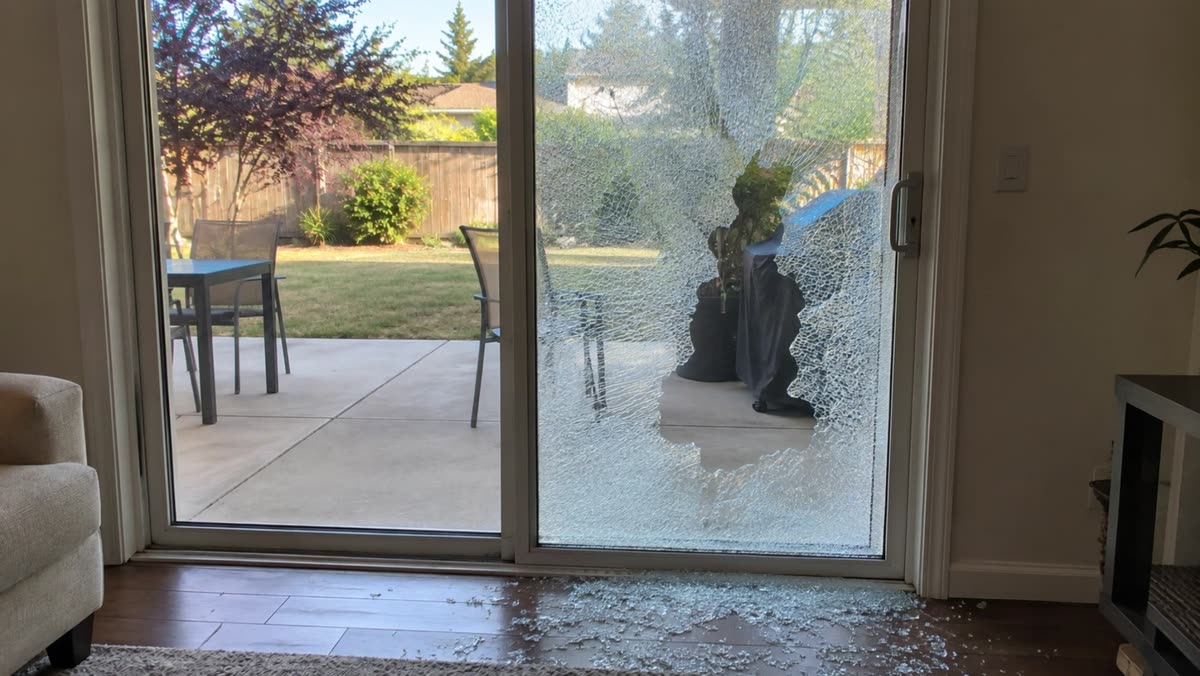
Try to describe the direction. “It takes a firm pull to start opening from fully shut” is more precise than “it is stuck.” If the frame appears loose, the panel has tilted, or the glass is damaged, leave it in place. Your description from past use or a wide photo can be enough to start.
A fixed bump and an intermittent bump tell different stories
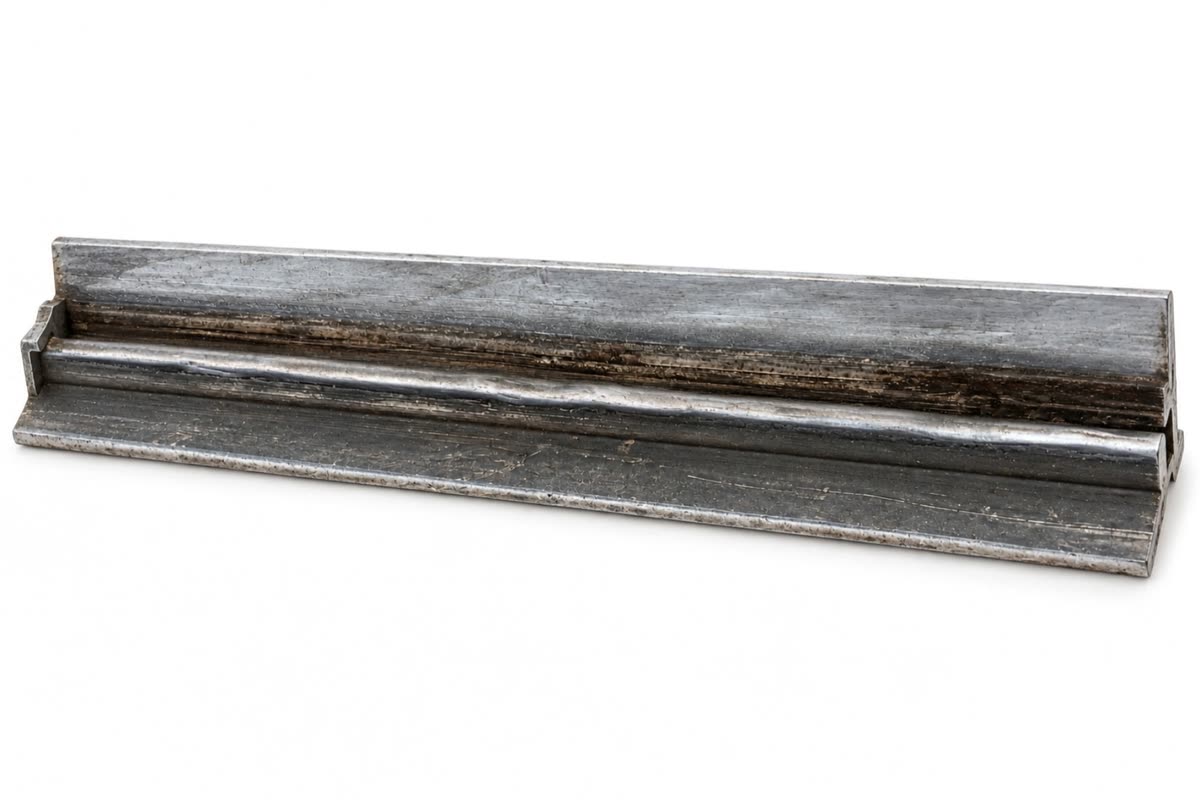
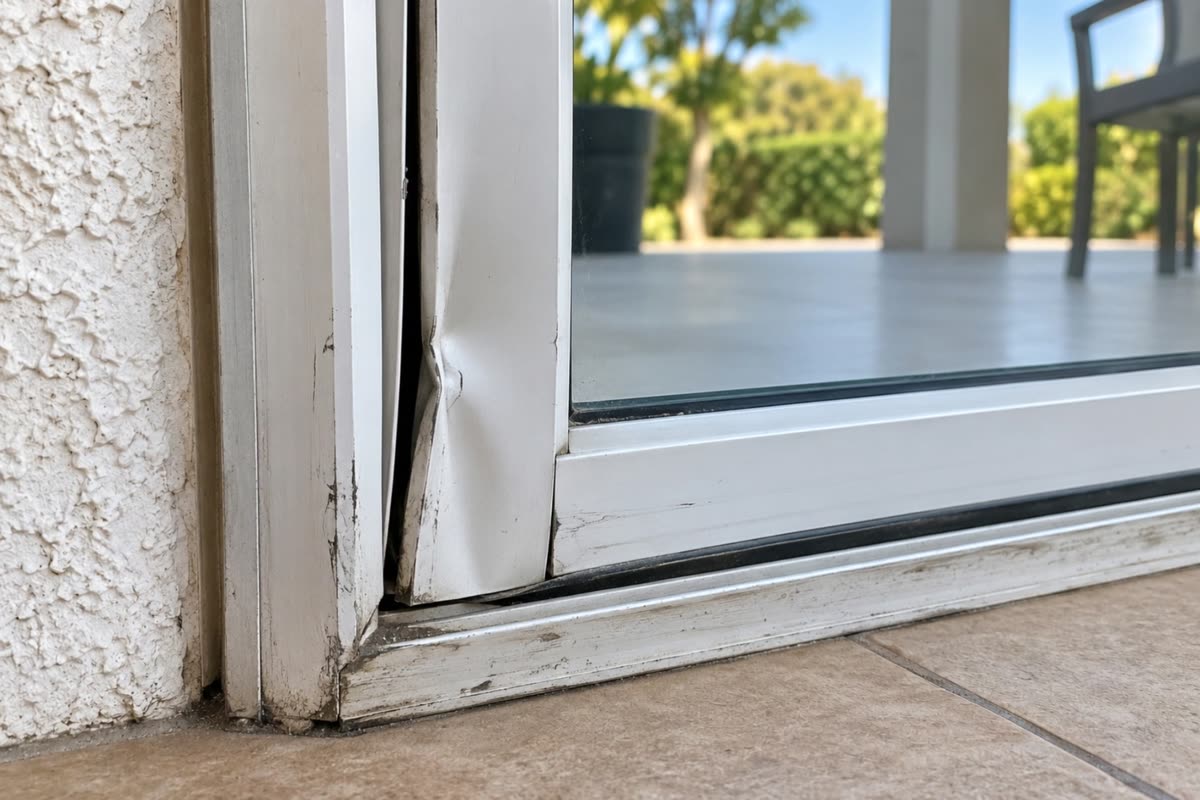
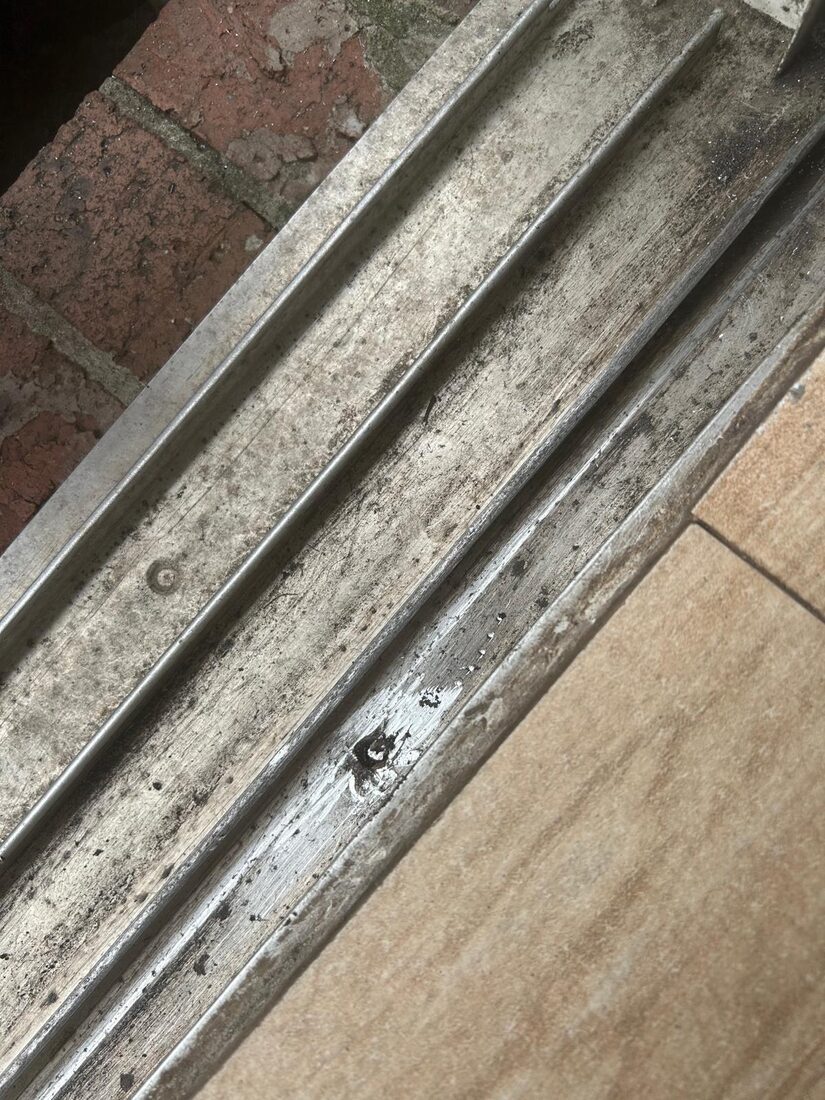
A chip or deformation on the part of the sill that carries the wheels can produce a jolt at a repeatable position. People often describe it as hitting a speed bump. Locate it in words, such as “a foot before the moving panel is fully open.” On a wider assembly, the leading and trailing wheels can cross the same damage at different points, so two jolts can still come from one rough spot. The technician will compare where the panel is and which wheel is on that part of the rail.
A jolt that moves around, a noise that follows the panel across the clear part of the track, or a scrape visible on the underside of the moving panel suggests a wider inspection. It is useful to know whether the same thing happens opening and closing. Share that instead of making the door run a dozen times for a video.
Check what happens at the latch
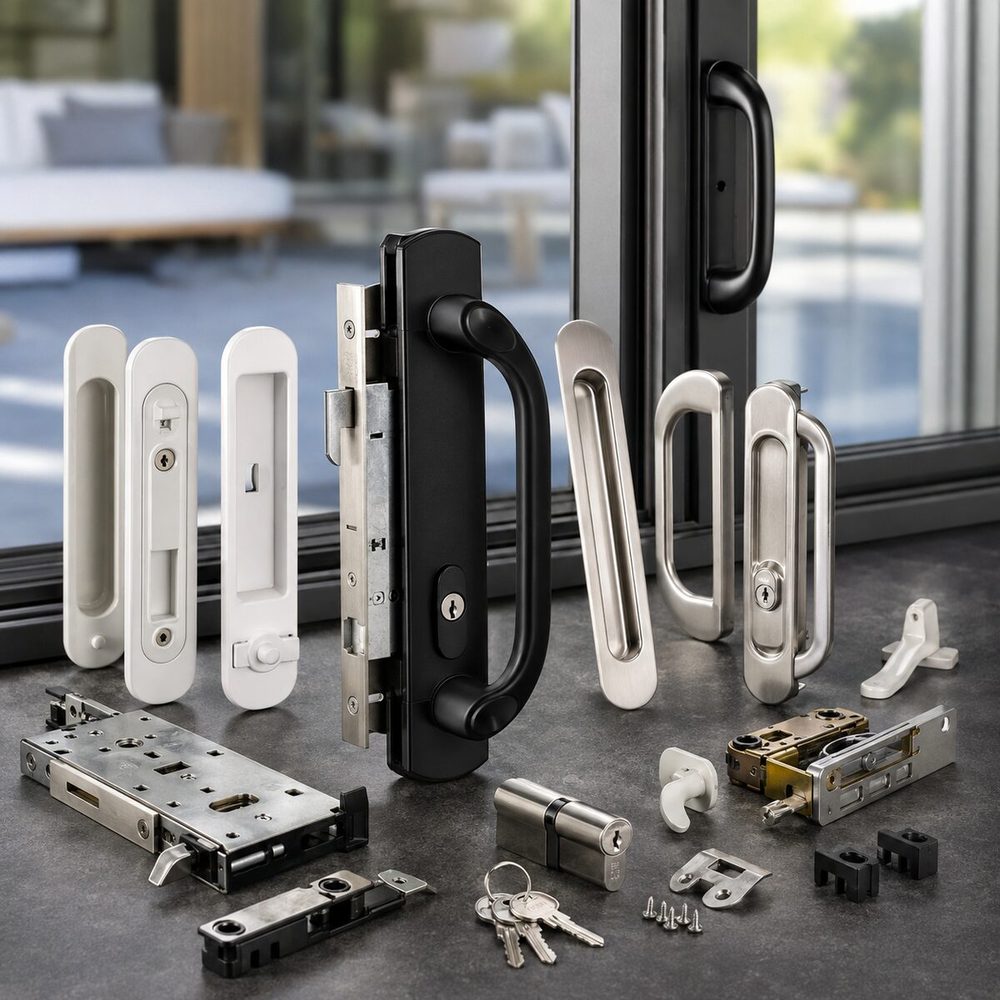
A door that travels smoothly and binds in the final inch has its own pattern. The panel may meet the jamb unevenly, the latch may hit the edge of its keeper, or the seal may resist because the panel is not seated as intended. Look from the room at the gap near the top and bottom of the closing edge. If one end touches before the other, say so when requesting service. There may be a fit problem even if the lever is also hard to turn.
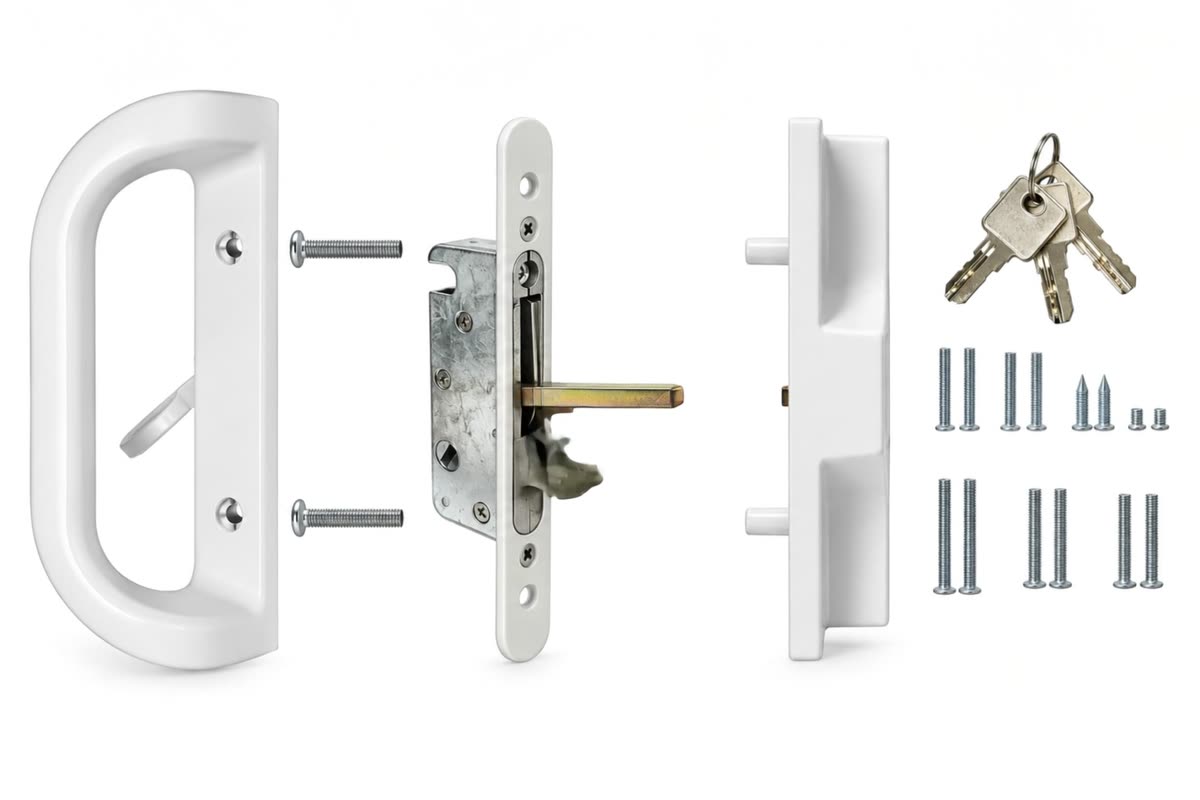
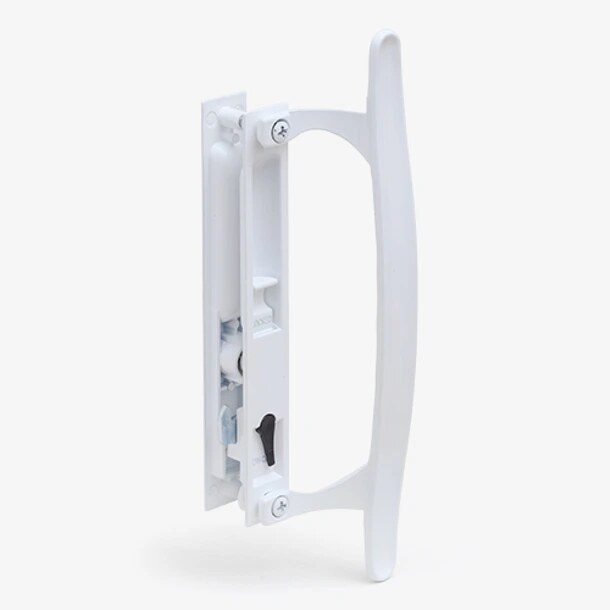
If the door has to be lifted at the handle to latch, mention that on the first call. A low panel can make a sound lock look worn out. Replacing the lever without checking its relationship to the keeper can leave the customer using the same awkward motion. When a door cannot be securely closed, tell the office what condition it is in now.
Tell apart the visible track and the rail that carries the panel
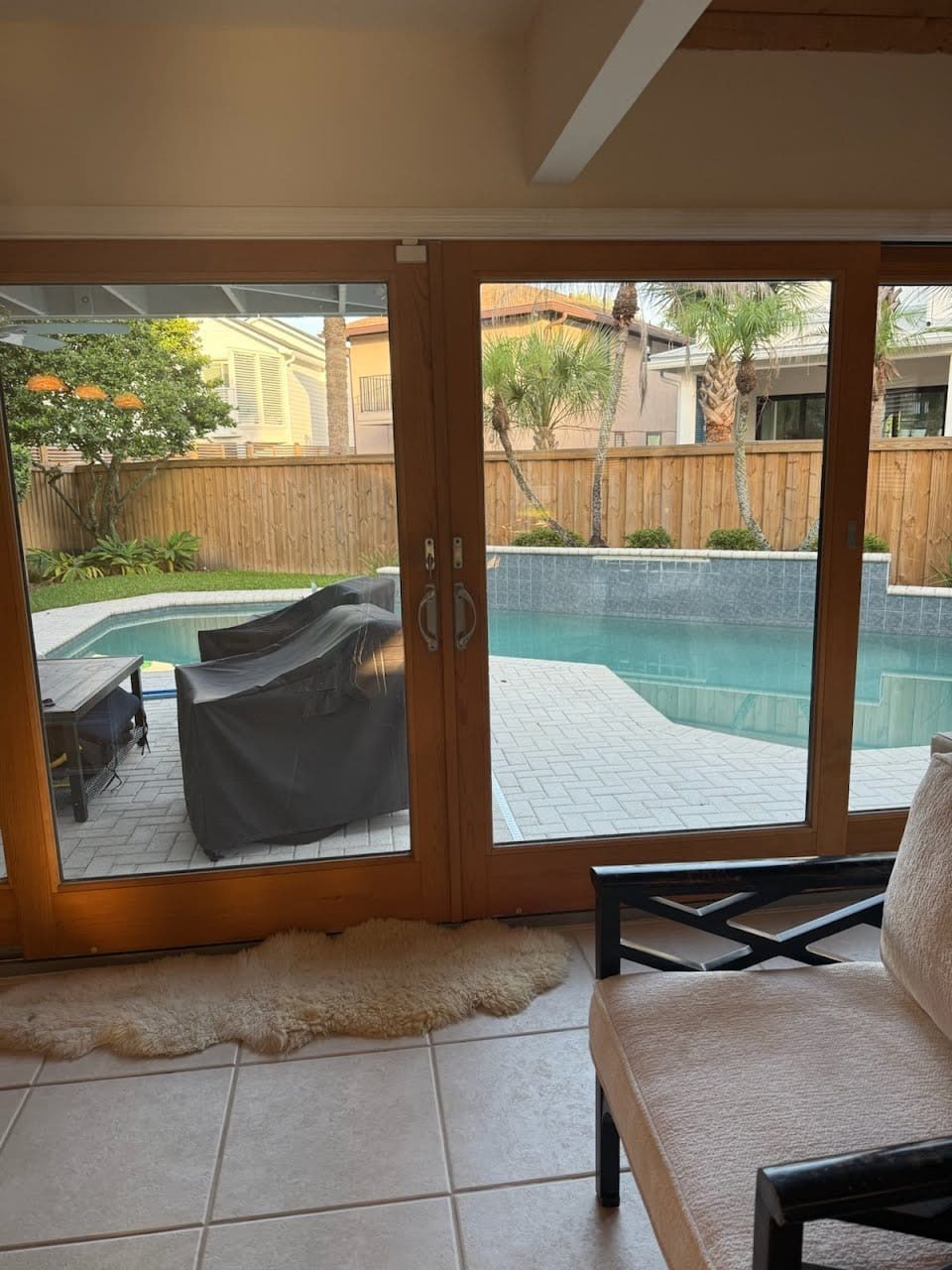
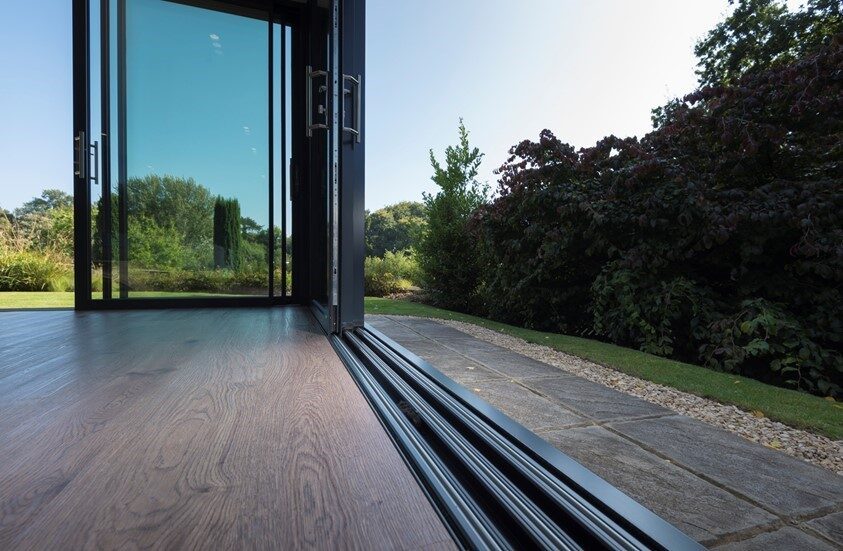
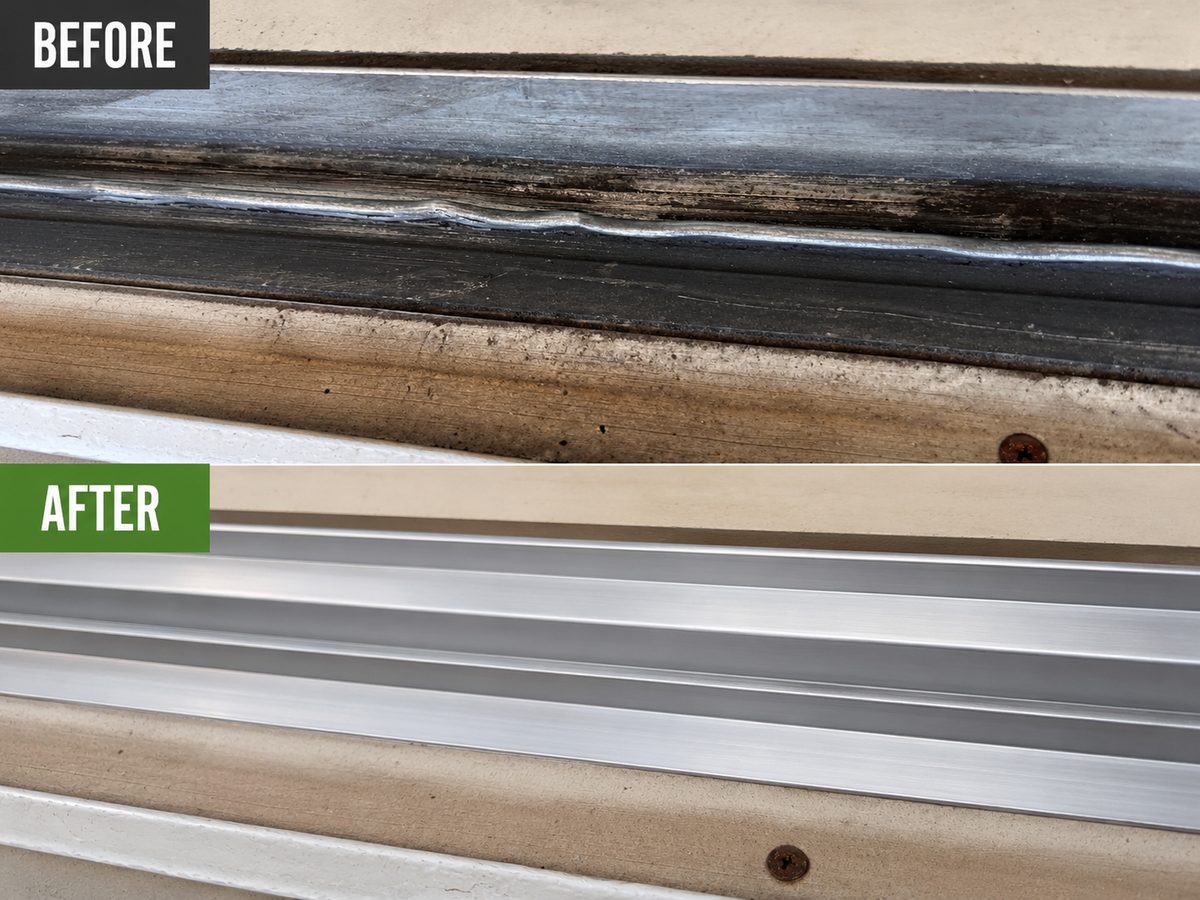
The sill can include a raised running rail, other channels, a screen track, and outlets designed to drain water. A pile of dirt in the closest groove does not prove the wheels run there. Start with the strip directly under the moving glass panel. You can often see a polished line where the wheels pass. Take a picture showing the whole width so the technician can tell which channel belongs to the slider.
Routine cleaning of accessible loose debris can be reasonable on a stable door. Use the care instructions for your unit. A rigid scraper can damage a coating or a soft running surface. Random lubricant can hide the symptom, attract dirt or disagree with the maker's instructions. If a door feels rough on a visibly clean rail, record that as evidence. It can help distinguish a surface cleaning issue from wear or a bent part.
Two examples from the same county
Imagine a La Jolla condo where the patio door sits above an exterior landing, and the sill develops a light residue. The owner notices that the door still feels rough through the middle of the opening after the visible channel is clear. For that request, the useful facts are the remaining roughness, the floor, the exposed side, and the building's access procedure. The ZIP code does not tell the repair team whether there is room to support the panel outside.
Now imagine a Poway patio door next to a yard that collected dirt after a windy afternoon. It moves well until it reaches one spot at the opening end, where it gives the same bump in both directions. That repeat position is a stronger clue than the fact that the rail was dusty. The homeowner can send a wide sill photo and point out the section. Neither example is a diagnosis. Each gives the visit a useful starting location.
What a technician can compare in person
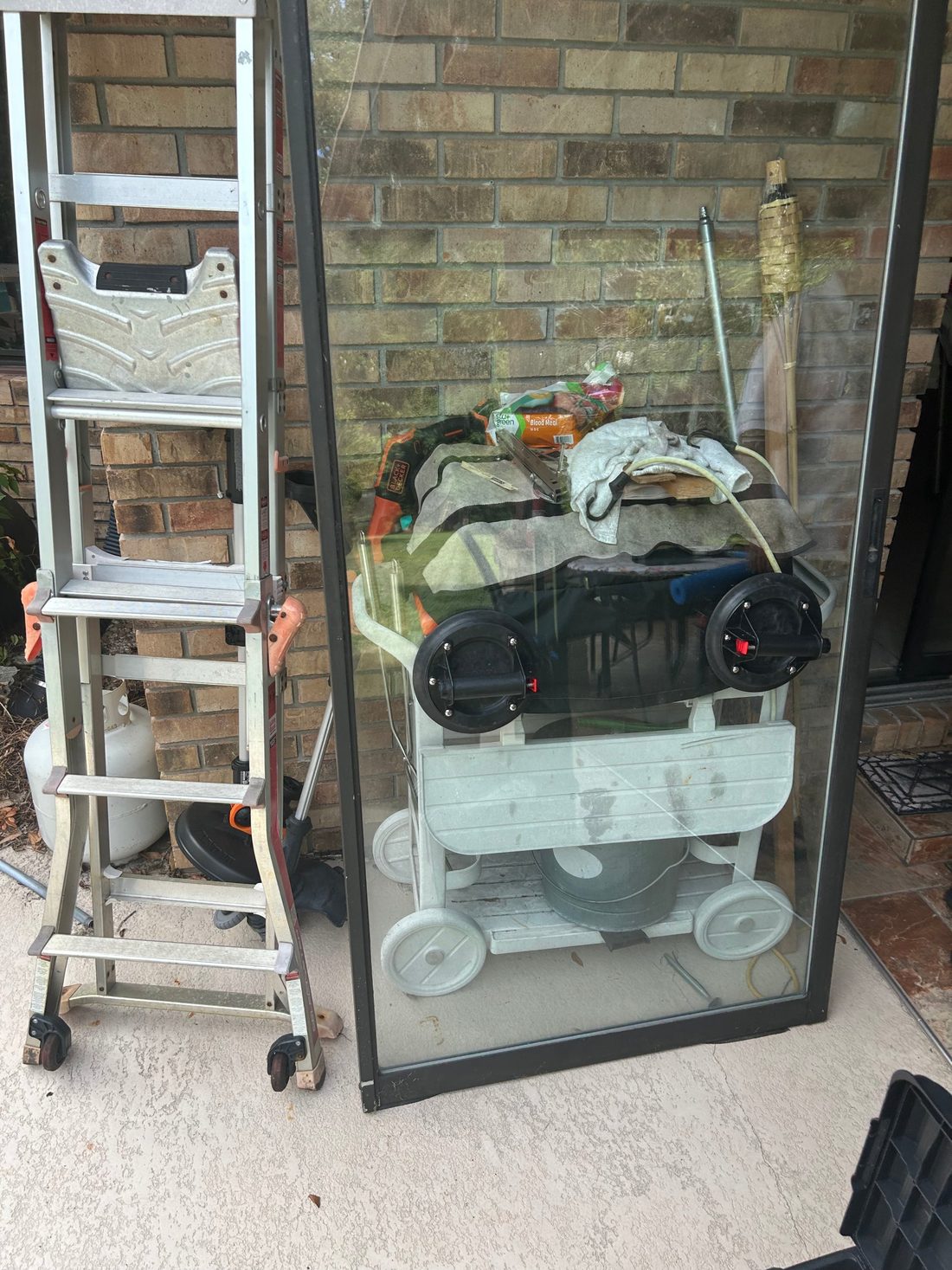
The technician can inspect how each wheel contacts the running surface, check for damage around a rail joint or fastener, and compare panel height and the gap at the jamb. On a paired opening, another panel may provide a useful comparison if it uses the same design. A door can need more than one correction. For example, a worn wheel may have left a mark on the rail, and the resulting panel height change may also affect the latch.
When the door and frame are sound, work on the worn component can be enough. Ask the technician to show the evidence and explain how the proposed work changes the movement. If there is damage to the opening or glazing, ask which part of the original unit can still be used. That conversation is easier when you have a clear description of the main problem, such as “I need this door to close and lock without lifting.”
Make a short record before you call
- When it changed. A problem that began after threshold work, a storm or a known impact deserves a different first look from one that has developed slowly.
- Where you feel it. First pull, middle of the travel, one fixed position or final closing edge are useful choices. Identify the moving panel from inside if the door has several.
- What the door can do now. Include whether it closes, whether the latch can engage, and whether the glass or panel looks unstable.
- How the opening can be reached. A ground-floor patio, a balcony reached through the unit and a sliding door beyond a side gate call for different visit planning.
- What has already been tried. Note a past wheel change, a track cover or a previous adjustment and how long it helped. Photographs of earlier parts or an invoice can identify the system.
A homeowner in Carmel Valley with two patio doors can label the pictures by room. Use “family room, right panel as seen from indoors” and “bedroom, only moving panel.” That saves the repair conversation from turning into a guessing exercise about left and right. It also makes it easier to tell which opening still works and which one needs to be addressed first.
Common questions
Does a heavy door always need new wheels?
A worn wheel is one possibility. The panel can also bind against the frame or encounter damage on the rail. A track inspection and check of the panel height help identify the repair that fits. If the problem shows up only as the latch reaches its keeper, include that so the entire closing path is assessed.
Is one noisy spot enough to ask for service?
If a spot returns after light cleaning, or a jolt has become stronger, it is useful to report it before the door becomes harder to secure. The priority is higher if the panel feels unstable, the glass is damaged or the lock will not engage. Describe the condition without trying to reproduce a risky movement.
What should I check after the repair?
Watch the panel start, travel through the original problem spot and close into the latch. Use ordinary pressure. Ask whether the technician saw wear that could affect future care and get the maintenance instructions for the parts used. If the whole household uses the door, show the other occupants how to tell it is fully latched.
Separate the glass panel from the screen
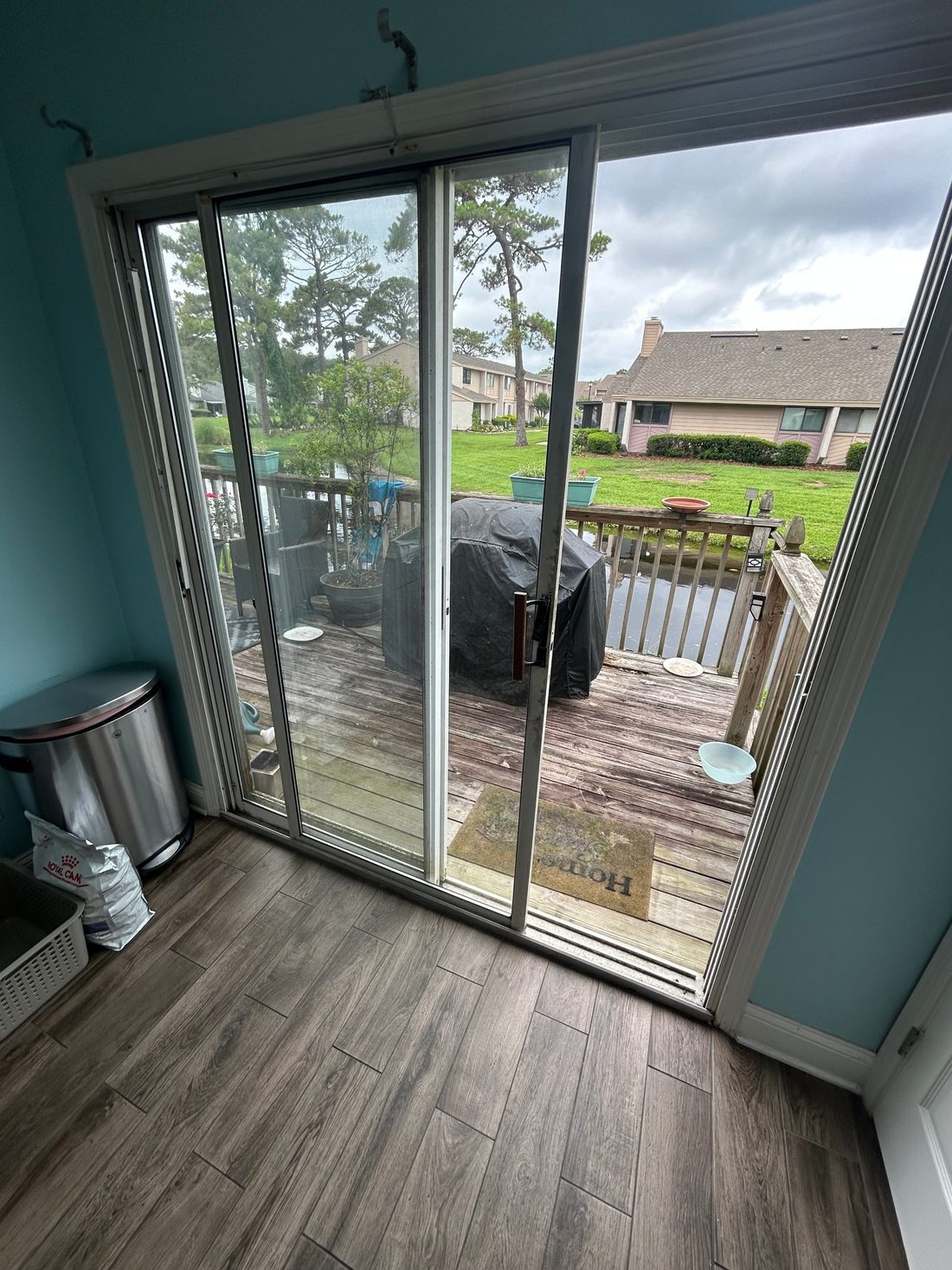
A sliding screen may make its own noise near the same part of the opening. Note which panel is actually moving when you feel the resistance. If the handle or frame of one brushes against the other, tell the technician where they pass. A wide picture showing both tracks helps the technician locate the affected path. A loose pull, a rough screen and a glass slider that will not latch can be three separate facts in one request. Prioritize the panel that affects access or security.
Local service and related pages
Explore Sliding Glass Door Repair, Sliding Door Roller Replacement, Sliding Door Track Repair. Service-area details are available for San Diego, Carmel Valley, La Jolla, Poway. Call 619-389-3123 or send a service request to describe the opening at your property.