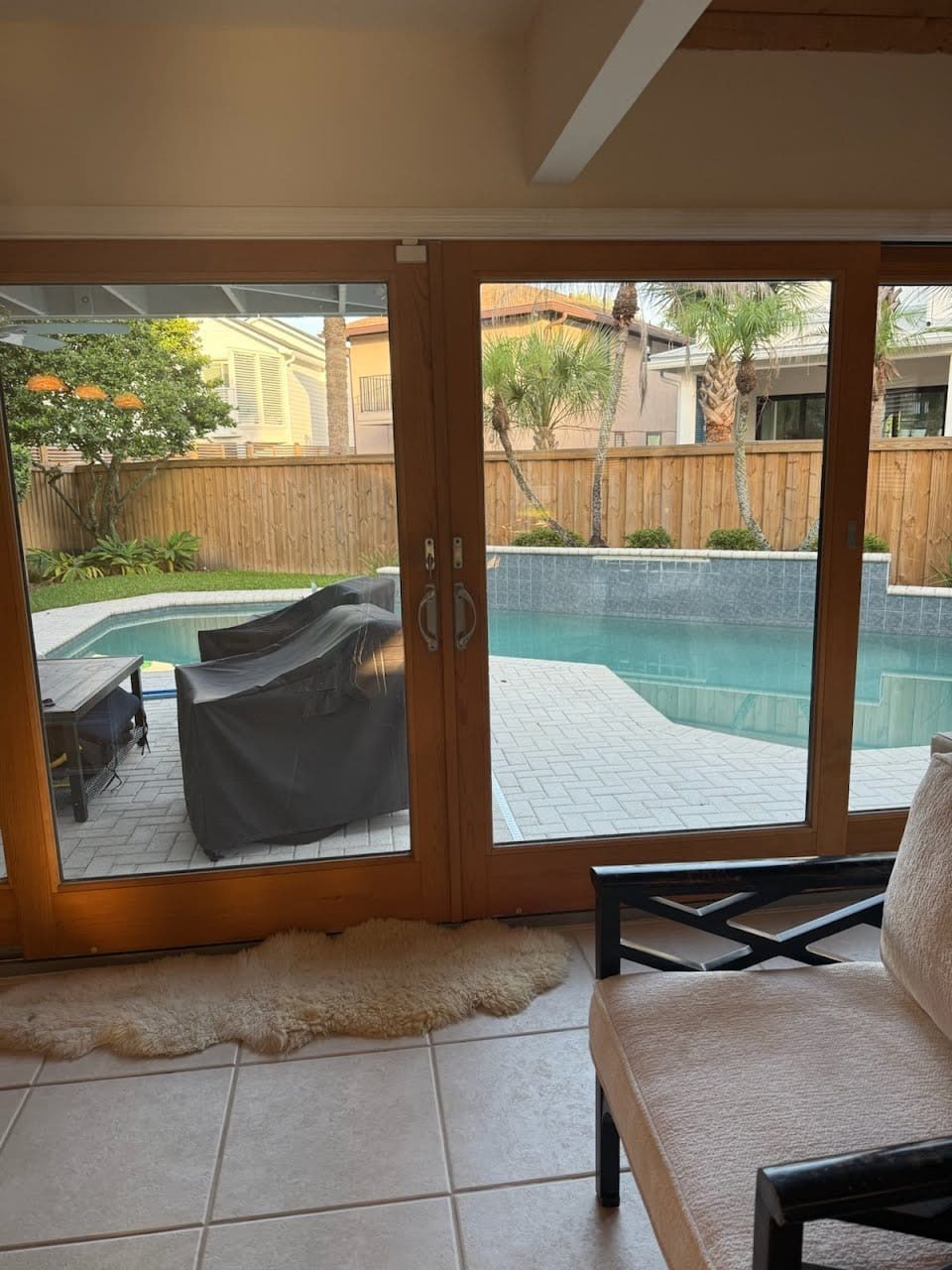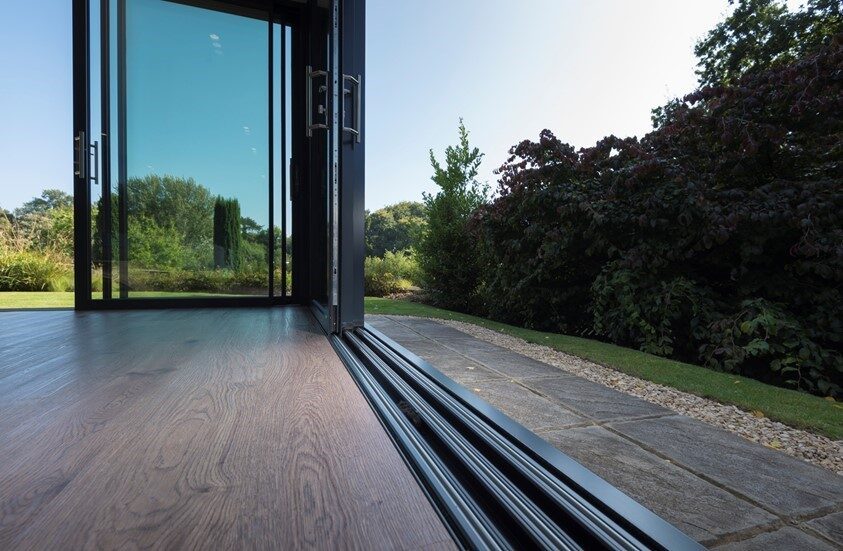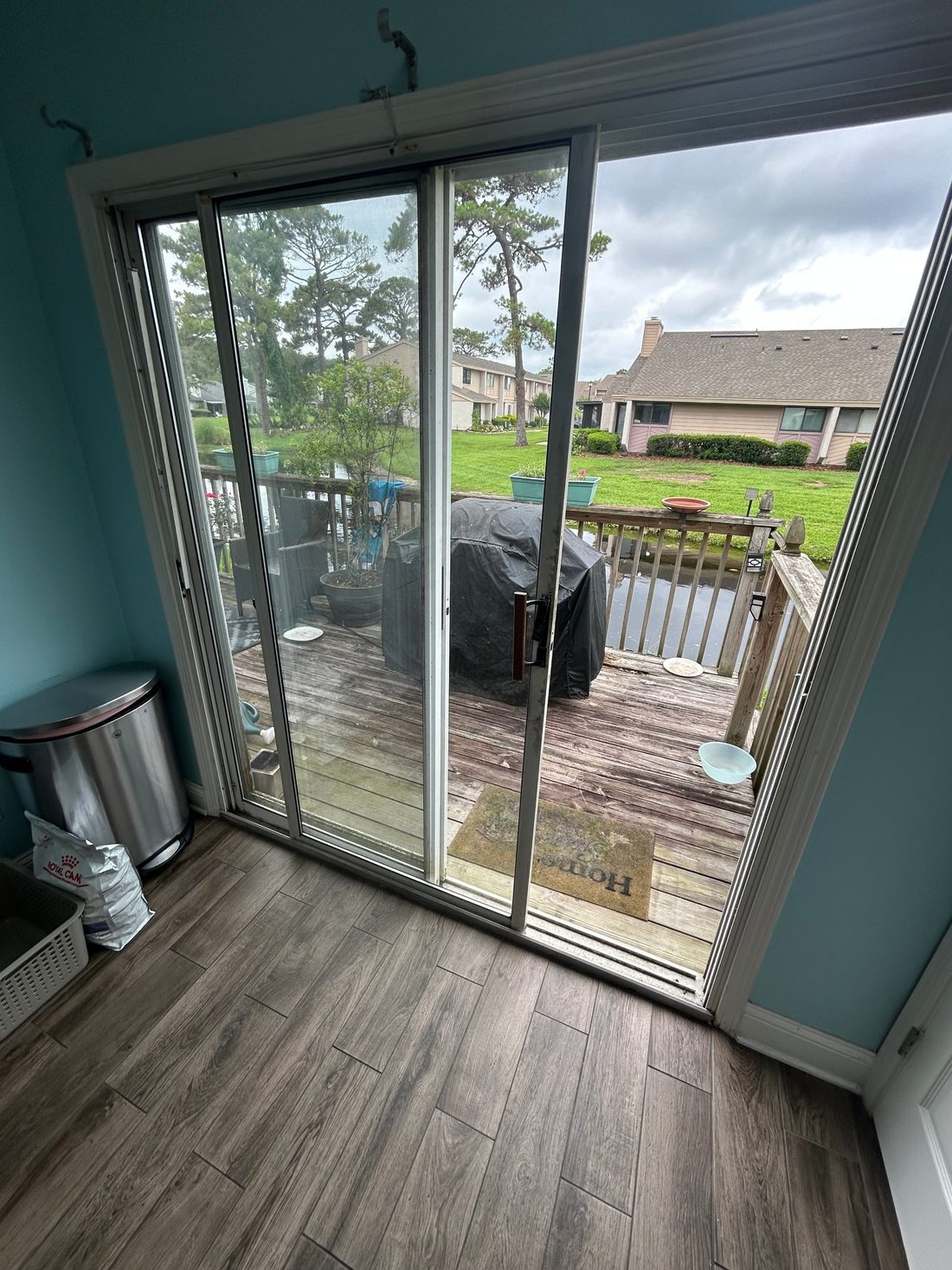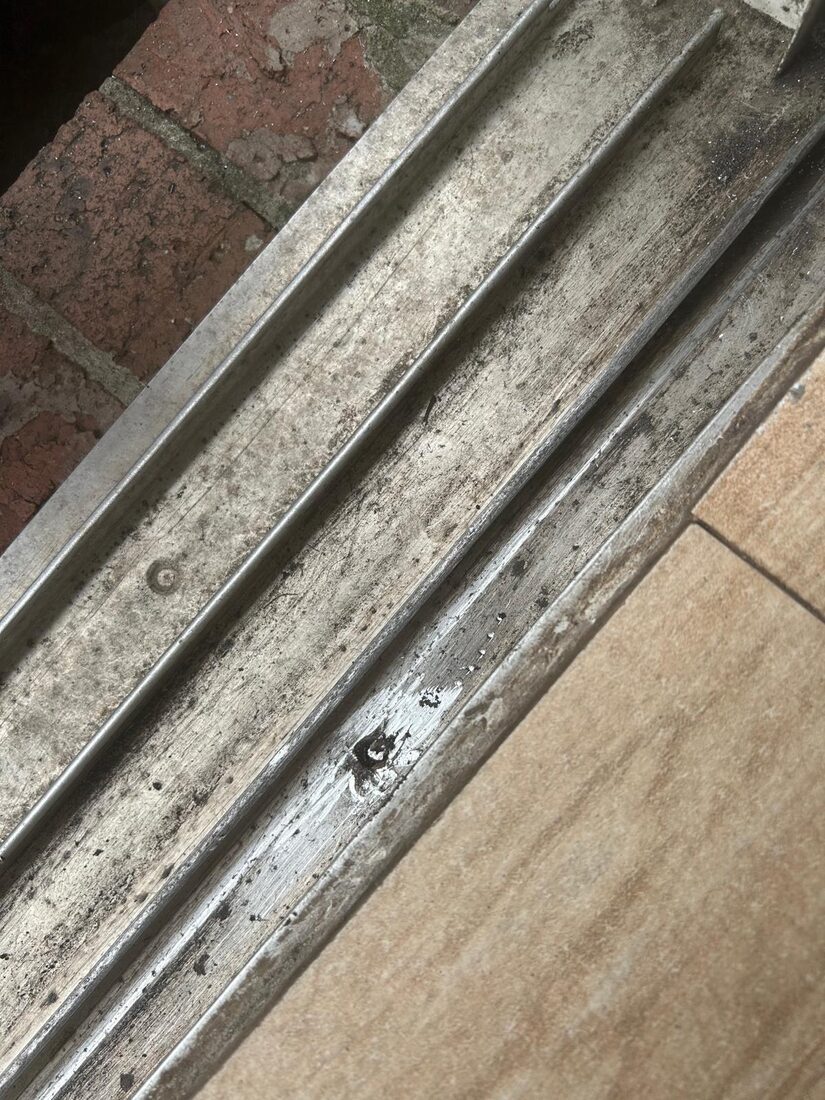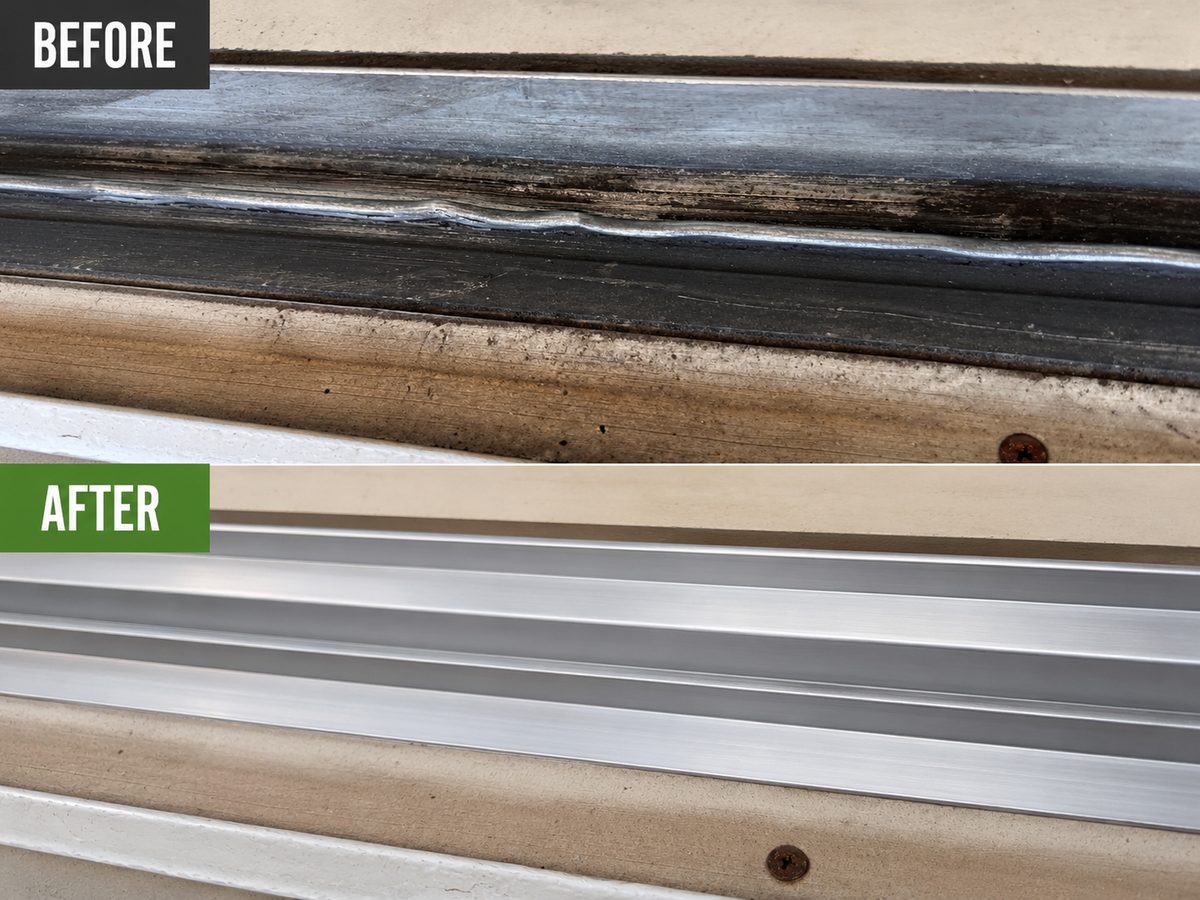

A dry wind event can leave grit at the sill and make an older problem more noticeable. Before and after conditions give you a way to tell what changed. Check the visible opening from a safe place, then describe any new impact, loose panel, repeat bump or gap. Use the actual condition of the door to decide whether routine care or a service visit is appropriate.
Keep a baseline of the normal opening
Take a picture of the sill, center edge and latch side before a season or after an ordinary cleaning. Save the date and orientation.
Wind can change the amount and location of material that reaches a door, especially on an exposed side. Compare a photo taken before an event with the first visible condition afterward if you have both. Note whether the problem appeared with dry debris, with rain, or after an impact. Work only where it is safe to reach the sill. A panel that is still rough once the loose material is gone may need a rail or wheel assessment. A record of the specific opening, direction and timing is more useful than assuming all sliders in a neighborhood responded the same way.
Record how exposure changes at the property
Note whether the door faces an open patio, sheltered side or different prevailing direction. Look at the actual material that reached the sill.
Use weather to choose when to look, then judge the door by what happens at that opening. A direction change can expose a door to rain on one visit and keep it dry the next. A long warm afternoon can make the room uncomfortable and still leave the actual rail condition unchanged. Record both the context and the mechanical symptom. Note whether the panel starts hard, the same contact happens at one end, or the latch becomes difficult. A technician can use a normal-day comparison to see which problems persist. The property location sets the setting, but the inspection starts with the specific door and surface.
Notice which channel received grit
Distinguish the active wheel path from nearby channels. Record whether movement improves after suitable care of an accessible stable opening.
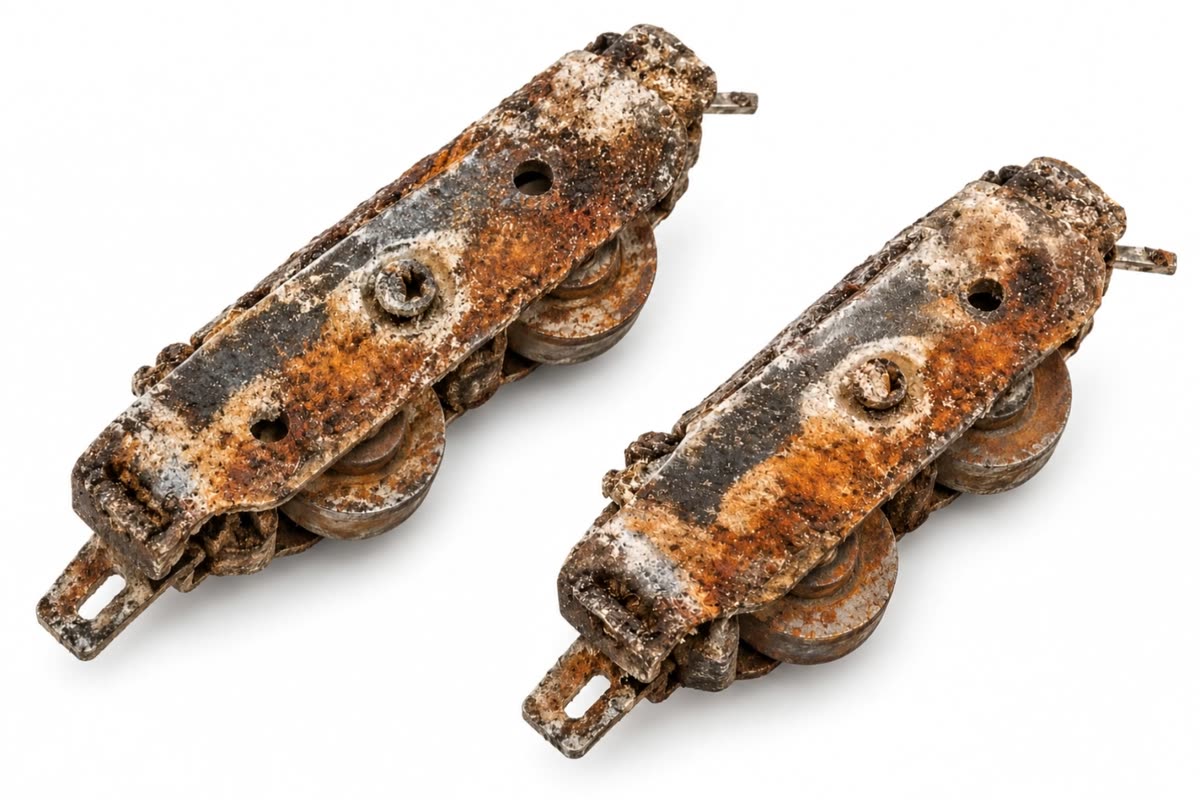
Loose grit can make a door sound rough without changing its geometry. The evidence is strongest when the panel moves normally once loose material is removed from the accessible track, then behaves poorly again after debris has visibly returned. Take care to identify the surface that carries the wheel. Sand next to a screen track can be conspicuous while the glass panel is actually running on a different strip. If a clear, stable rail produces a bump at exactly the same point, describe that remaining pattern. It gives the technician a more useful starting point than the amount of dirt on the sill alone.
Keep the outlet area visible
Debris can collect where the sill is designed to drain. Identify the path by the product's instructions and preserve its function.
Start with the difference between water the sill is designed to collect and water that crosses the indoor side. The maker's diagram can show where the exterior exit is and which part of the threshold catches water. A past repair, settled patio surface or loose material can alter the observed path. Give the technician a view of the surrounding landing as well as the door. Record any condition after the water has had time to drain, such as a channel that stays full. An assessment can address accessible parts of the door and identify signs that water is reaching the opening from another source.
Inspect visible changes to seals
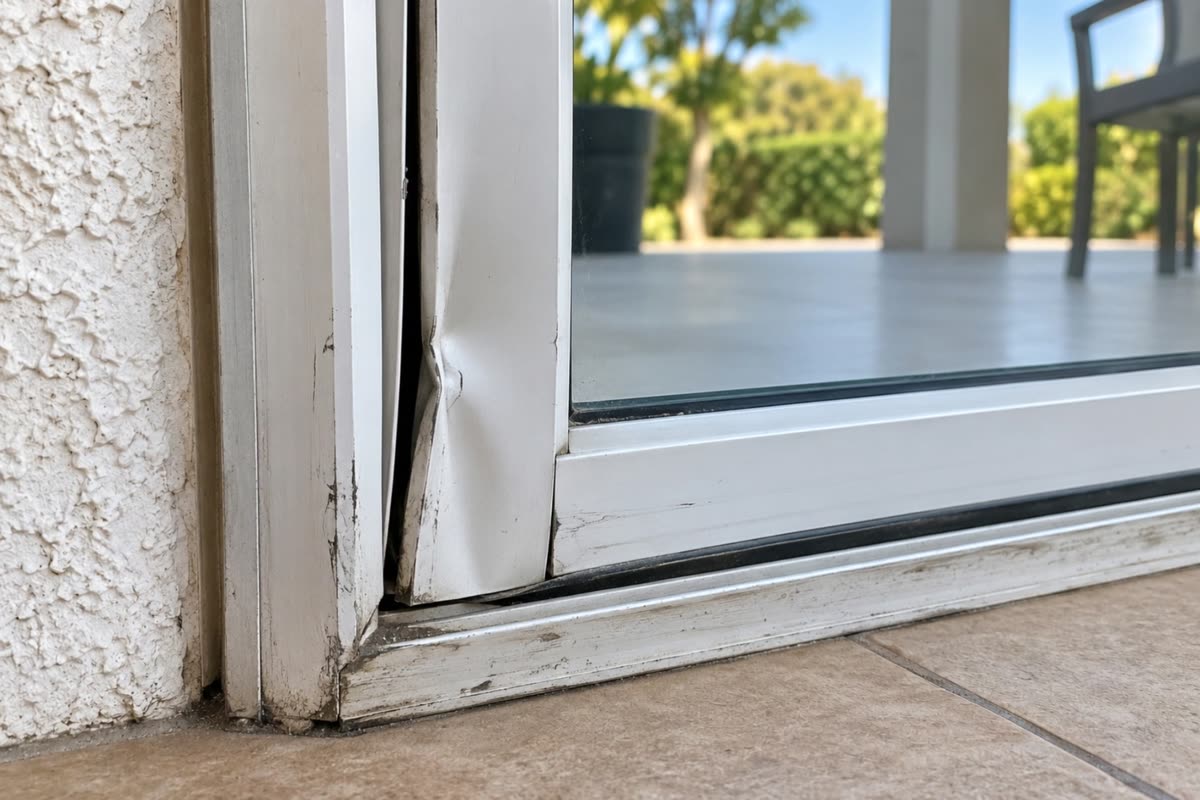
Report a displaced strip or a gap that developed along one edge. Include whether the door reaches the latch with ordinary pressure.
Show the old strip in place before choosing its replacement. The contact face, the channel that holds it and the direction the panel travels all matter. A thicker seal can increase the effort at the handle, and the correct profile may differ along the jamb and center overlap. Record whether the original flattened evenly or only where one corner passes. A localized change in wear can help identify whether fit needs attention too. Ask the technician what the installed strip will contact, which parts will stay and how they will check movement and latching once the seal is fitted.
Document any new impact
If a sound or mark appeared suddenly, give its timing and location. Identify what changed before repeatedly operating the opening.
Keep the last normal use and the first problem as two entries. Add any event between them, such as a service visit, new flooring, an outdoor project or visible impact. It is useful to know if the symptom improved briefly and then returned. If someone already installed a track cover or changed wheels, bring the original scope if you can. Describe the current closing and travel independently of the history, because a new issue can develop elsewhere in the same door. A short timeline makes it possible to evaluate whether the earlier work addressed the part that is failing now.
Keep a loose or tilted panel still
If the panel appears unstable, clear the immediate area and describe the position from a safe location. Arrange assessment and access.
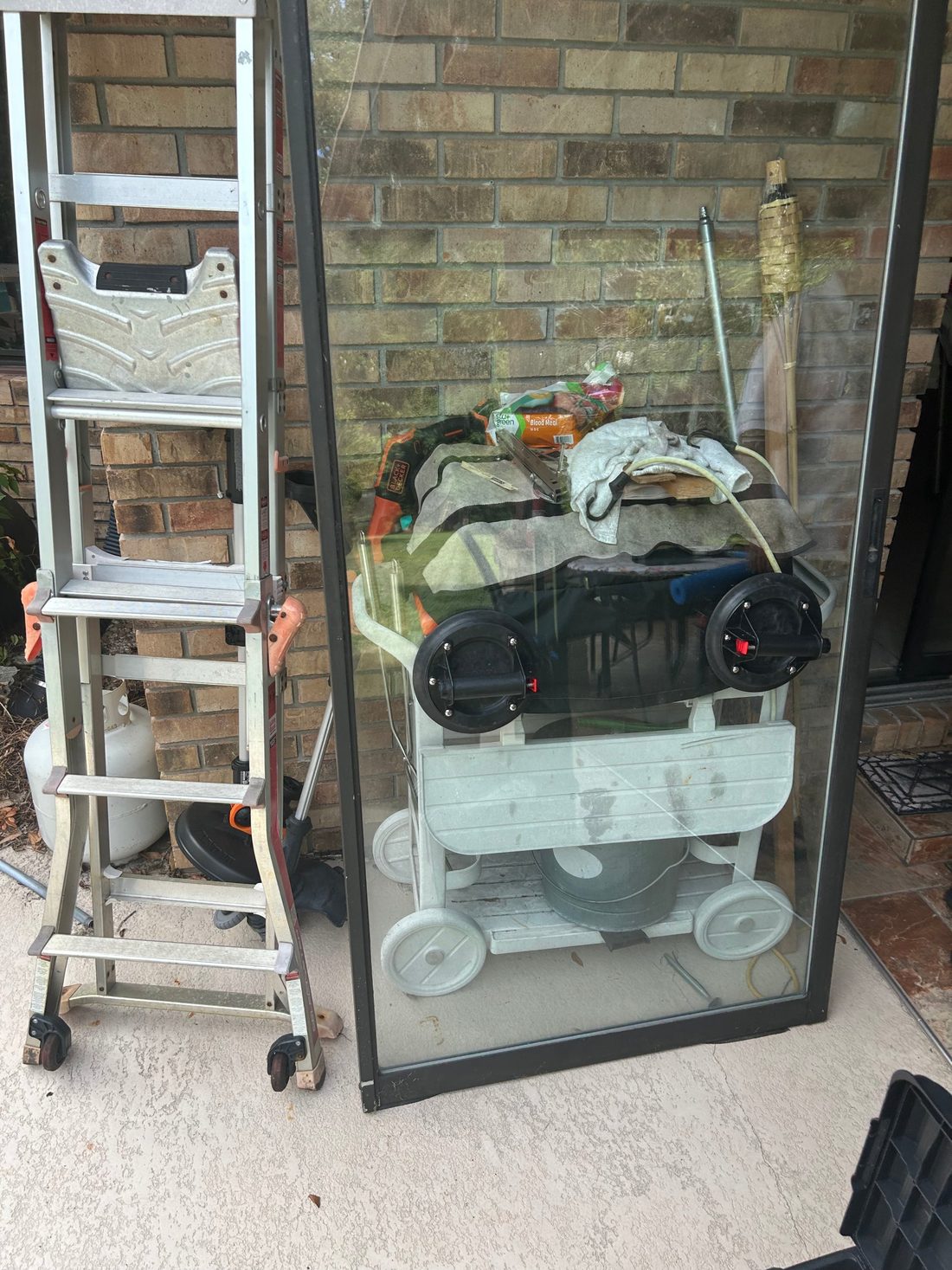
If the panel appears to have lost stable support, treat that observation as the first thing the service provider needs. Keep the room or patio side clear and record the position from a safe place. An opening that was left partly open can raise access and security questions even before the part failure is known. Tell the responsible property contact whether people can approach it from either side. The technician can plan the required support after seeing the panel and approach. A heavy glass door can move unexpectedly when someone tries to hold or lift it, so use a description of the current state instead of demonstrating it.
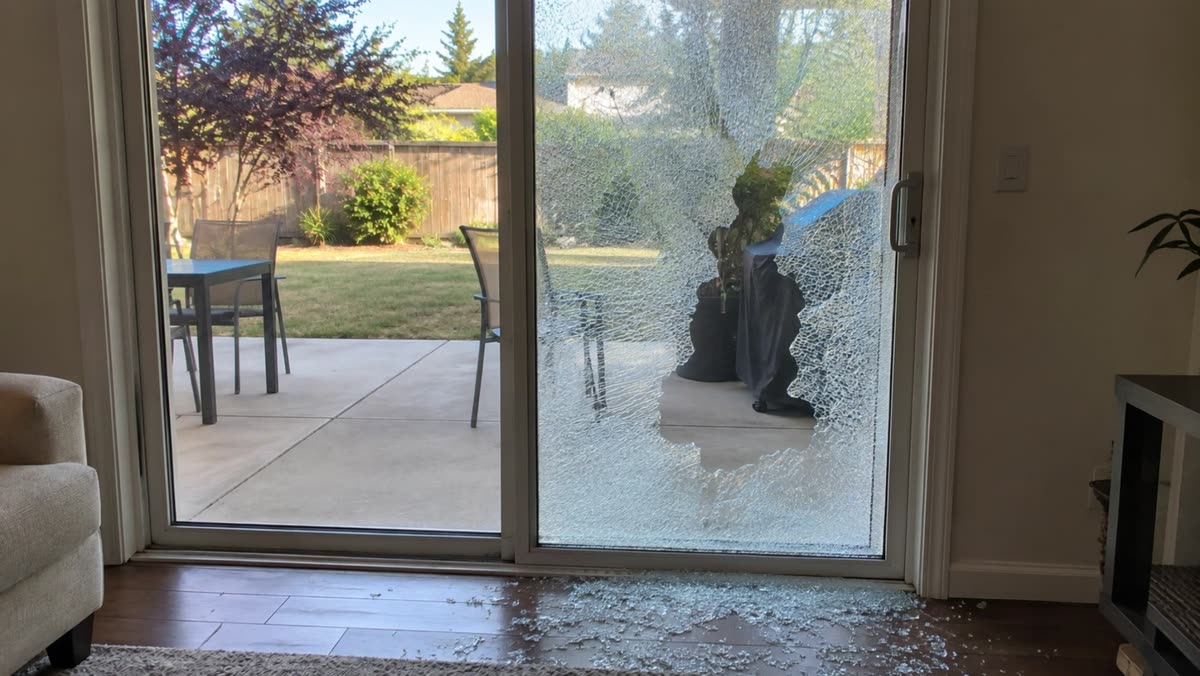
Note glass damage independently
Keep people away from a fracture or loose glass. Say whether the affected pane is in the moving side and how the opening can be secured.
Give the location of the break and the rest of the opening's condition. A fracture contained in the glass and pieces on the floor present different handling needs. Describe the panel as viewed from a safe distance and keep people away from both reachable sides. If an exterior walkway or common area is affected, inform the property contact so access can be managed. The professional can identify the safety glazing and how it was retained before selecting a replacement. Tell us if the door can be left in its current position and whether anyone uses it as a necessary route. Those details help plan the visit.
Find a repeat bump after the event
If a stable slider still catches at one location after the path is clear, give the point on the sill and the direction of travel.
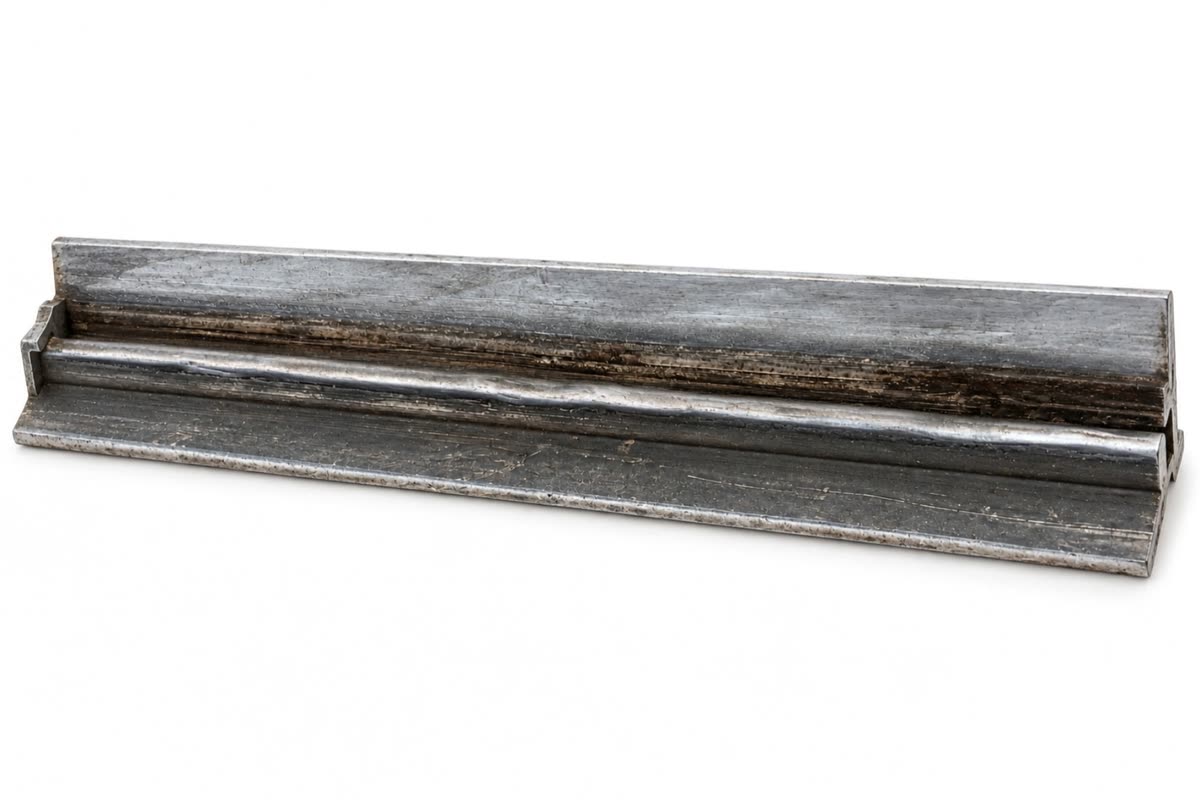
Think of the rail as part of the load path from the glass to the sill. Wear that follows the entire width of a busy opening is a different project from a short interruption near a joint. Ask which material is carrying the door and which layer is only a cover. If a previous repair profile is present, it changes how wheel position and panel clearance should be assessed. Point out whether the threshold moves when crossed, since that may be a support concern separate from a rough wheel path. A clear estimate states the length of damage and how the proposed repair will restore stable contact.
Verify normal closing and security
Check the way the panel seats during ordinary use if safe. Report a missed keeper or stiffness that remains after the visible dirt is gone.
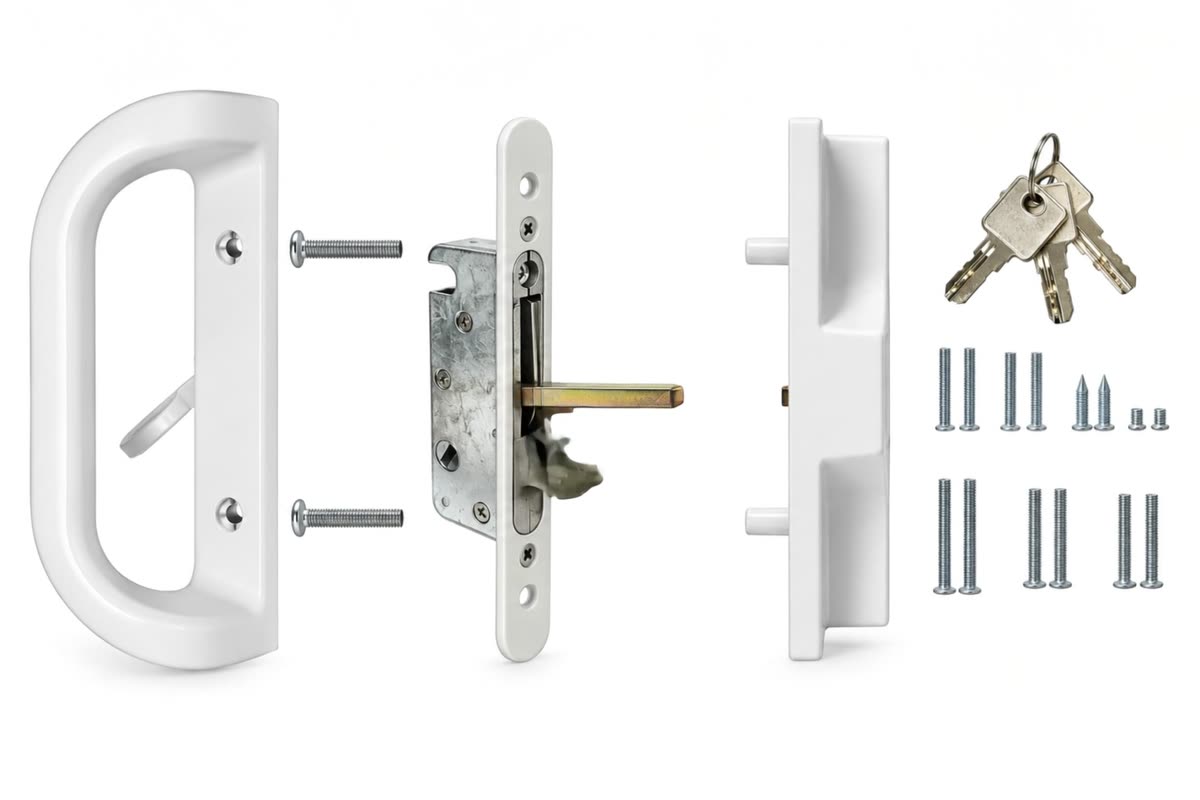
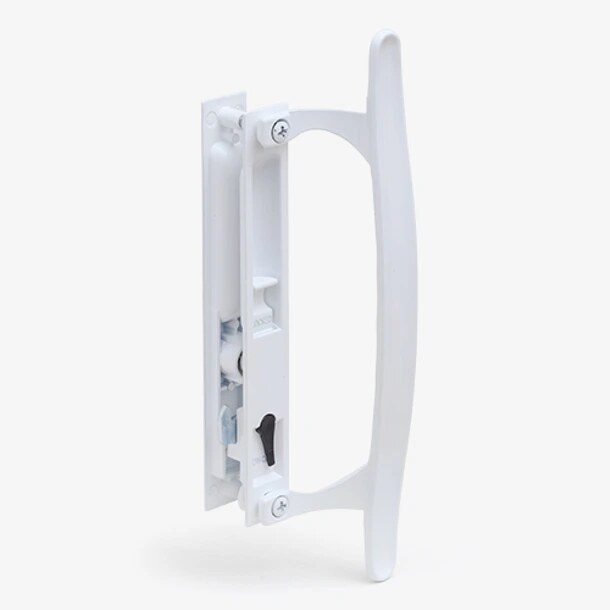
A lock inspection can start with two questions. Can the mechanism operate at all, and can it reach its receiving piece when the panel is fully closed? A worn lever or internal part can fail even with the panel positioned correctly. A jamb, wheel or frame issue can create a similar complaint when the latch never lines up. A report that includes the width of the closing gap in words and the motion of the lever helps separate the two. Ask whether the repair changes the latch, keeper or panel position. Confirm what counts as fully latched for the actual hardware after the work.
Keep the record and adjust the care plan
Record the conditions, part of the opening and result. Use the pattern to choose when the accessible surfaces need care or when repair is appropriate.
A useful care routine is small enough to repeat and specific to the product. At an exposed opening, note when debris appears and care for the accessible track and drain areas according to the manufacturer's instructions. At a busy door, use ordinary operation to notice increasing effort or a lock that changes position. Keep a short history of what was cleaned and when a persistent symptom first appeared. If a repair is needed, this history helps distinguish a recurring exposure condition from wear or a part that needs attention. Keep the care instructions for any replacement rail or hardware with the service record.
Local examples in Rancho Peñasquitos and Scripps Ranch
Rancho Peñasquitos and Scripps Ranch properties can have exposed yard-side openings and protected patio recesses. An Alpine property might have a separate deck or outdoor approach. For each one, write down which side saw the event and where the debris went. A date, a photo and the current state of the lock are more useful than reporting only that the door became difficult during a windy week.
Questions to ask
Does dry wind cause every new door problem after a storm?
Wind and debris can be relevant. Also consider impact, visible rail wear and a condition that existed before the event.
What if the opening was already rough before the wind?
Describe the baseline and what changed afterward. Keep earlier repair details and photos with the request.
Should I operate a door that appears tilted?
Leave it still and keep the area clear. Tell the technician where the panel sits and whether the glass appears damaged.
Local service and related pages
Explore Sliding Door Track Repair, Sliding Door Weatherstripping, Off-Track Sliding Door Repair. Service-area details are available for Rancho Peñasquitos, Scripps Ranch, Alpine. Call 619-389-3123 or send a service request to describe the opening at your property.