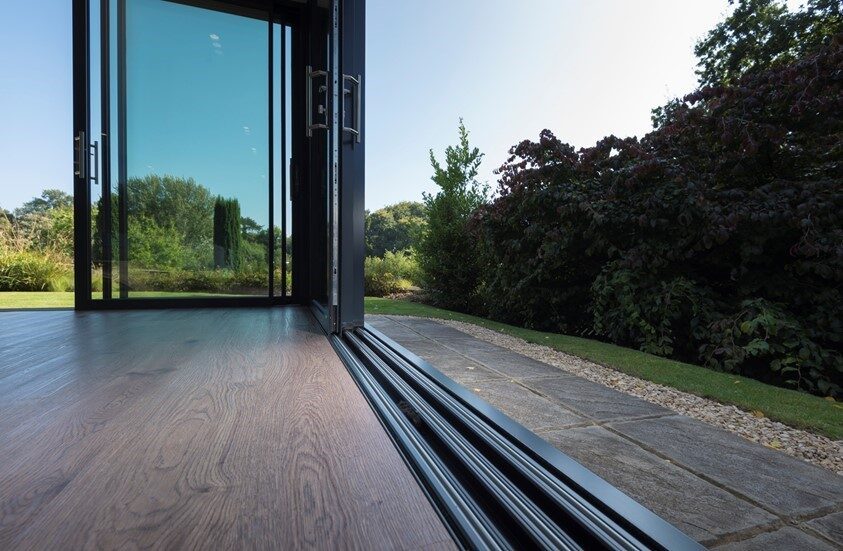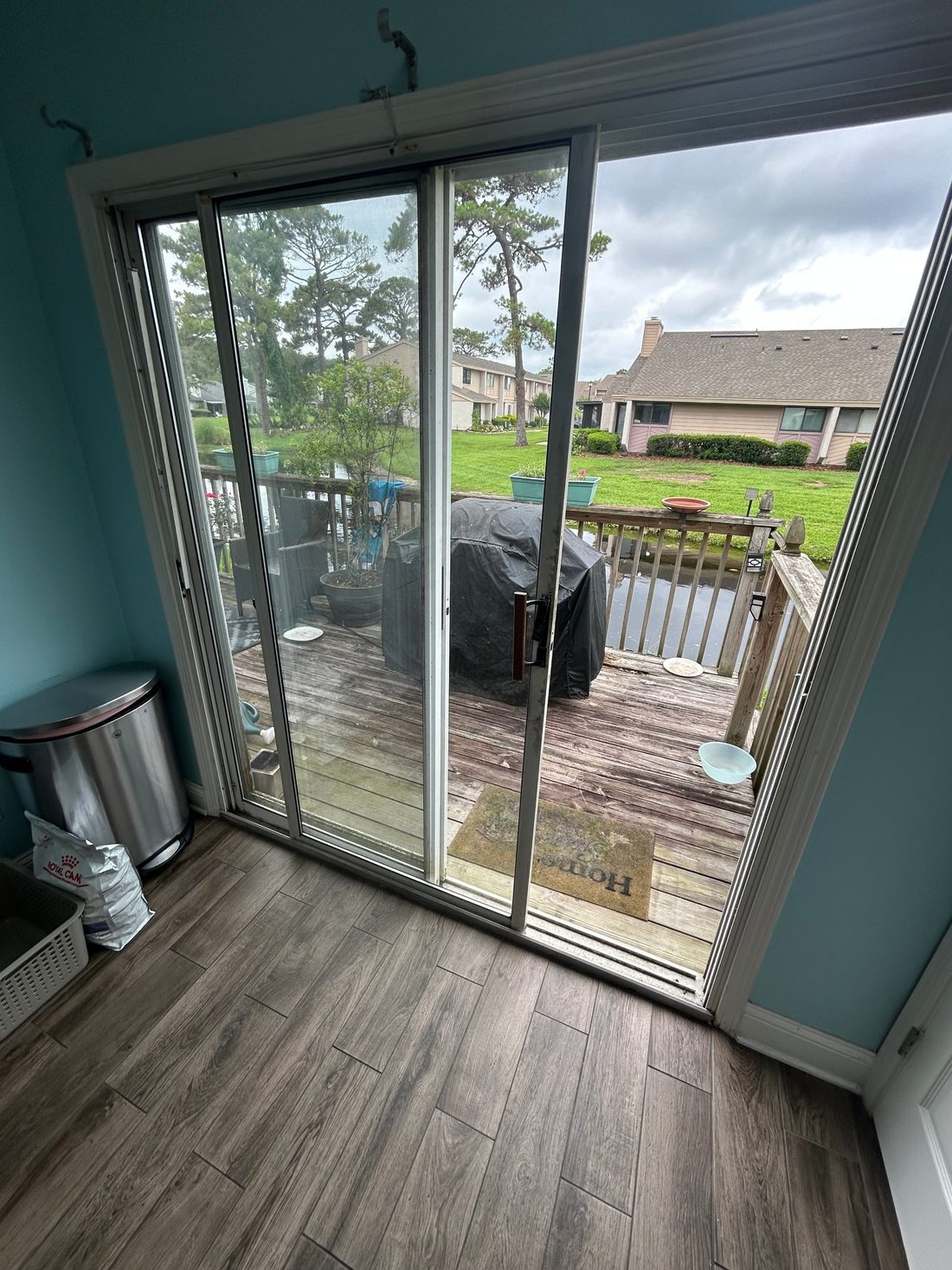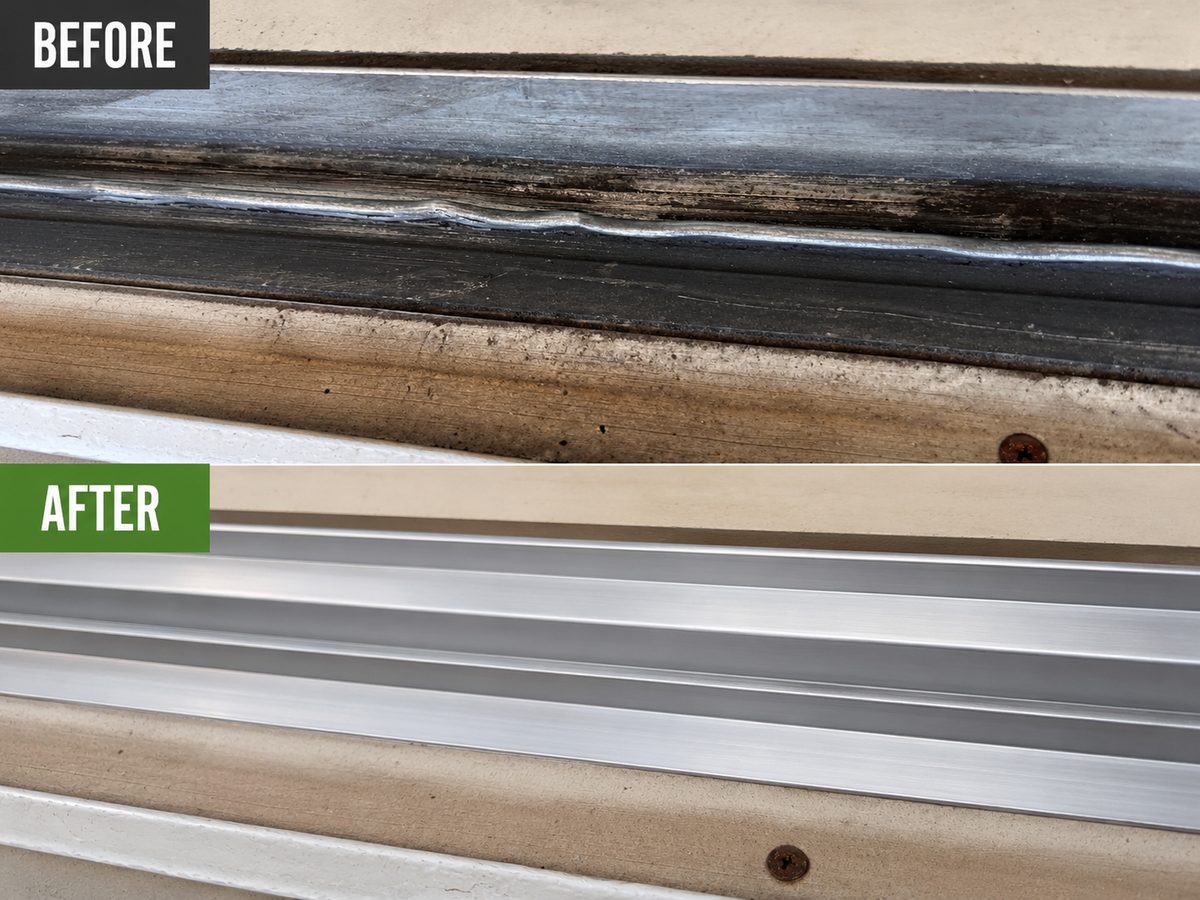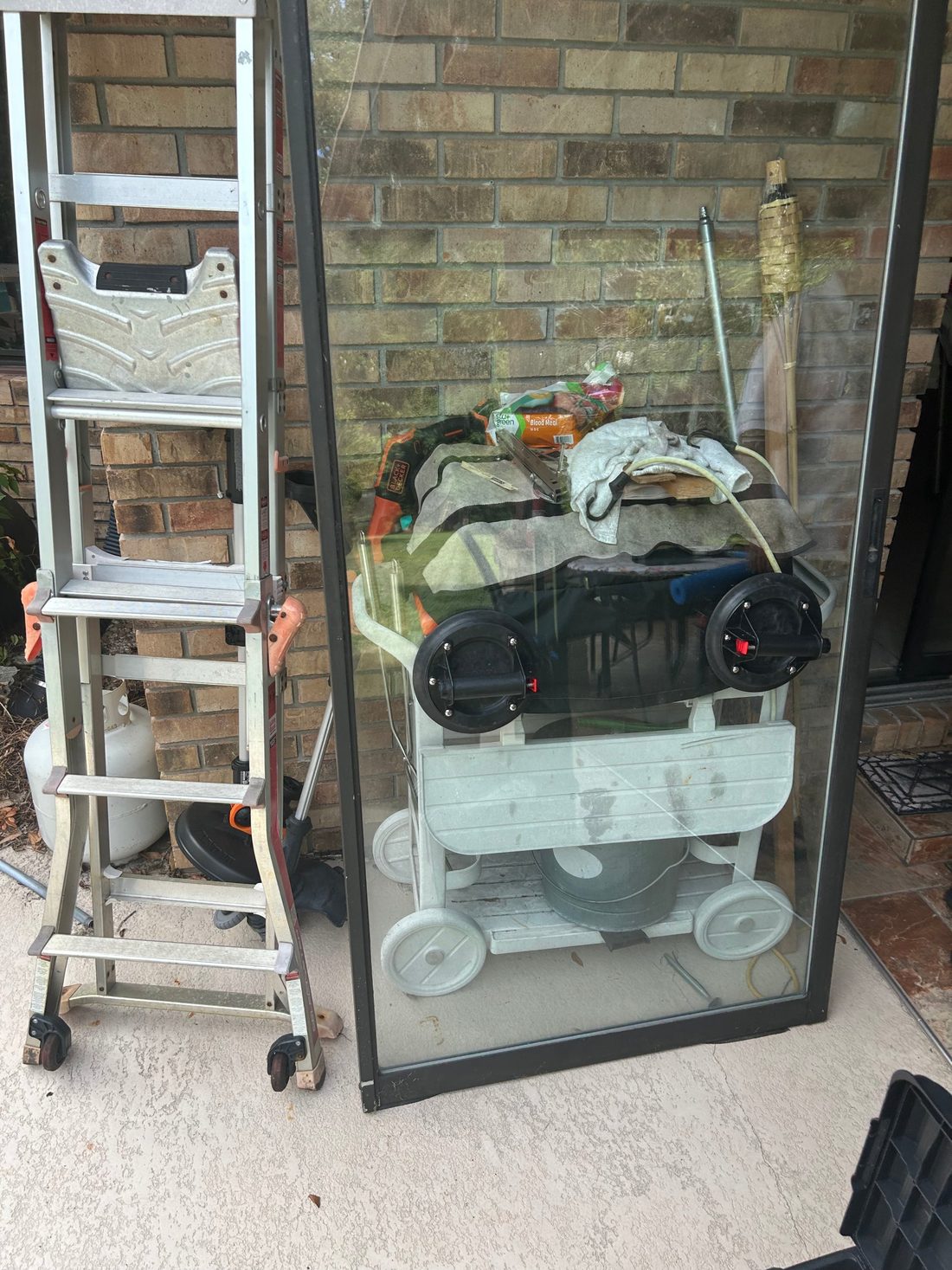
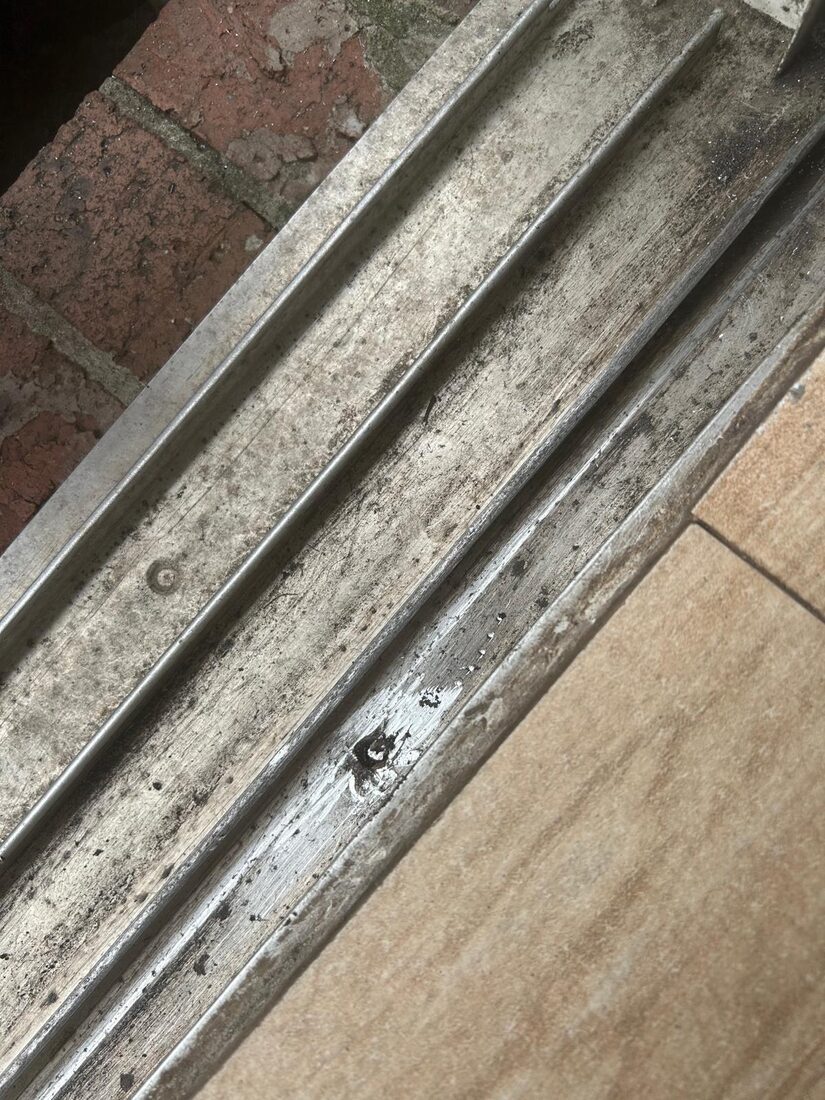
A clear sill lets you see where a slider actually runs. It also gives you a baseline for the next time the door feels heavy. In San Diego, a patio can collect fine grit from a yard or residue on an exposed coastal side. The first useful cleaning session is the one that identifies which channel belongs to the glass door and shows whether the original symptom is still there afterward.
Identify the track you need to clean
Start with the screen and the glass panel in view. Photograph where each runs so you can tell which channel accumulated the material and which panel makes the sound.
A screen and a glass slider can share an opening while using separate wheel paths and hardware. A squeak from the screen may sound like it comes from the glass door when both move near the same time. Observe which panel is moving when the sound starts. Check what happens at the meeting edge and whether one handle or frame touches the other. A change in glass panel height or an oversized handle may affect clearance beside the screen. Give the technician a photo showing both panels and which track each one uses. This can help isolate the part that needs attention without assuming both units must be repaired.
Work only on an accessible, stable opening
Leave a loose, tilted or visibly damaged panel still. From a safe standing position, record the obstruction and tell the repair team whether the glass door can be left secured.
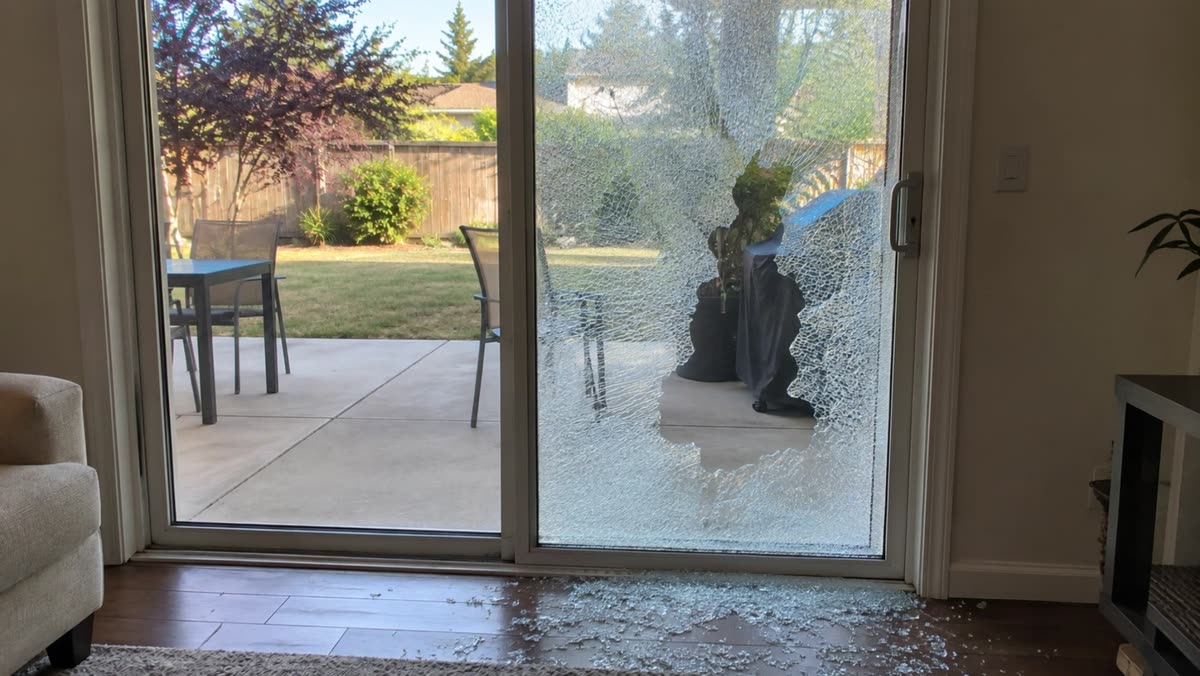
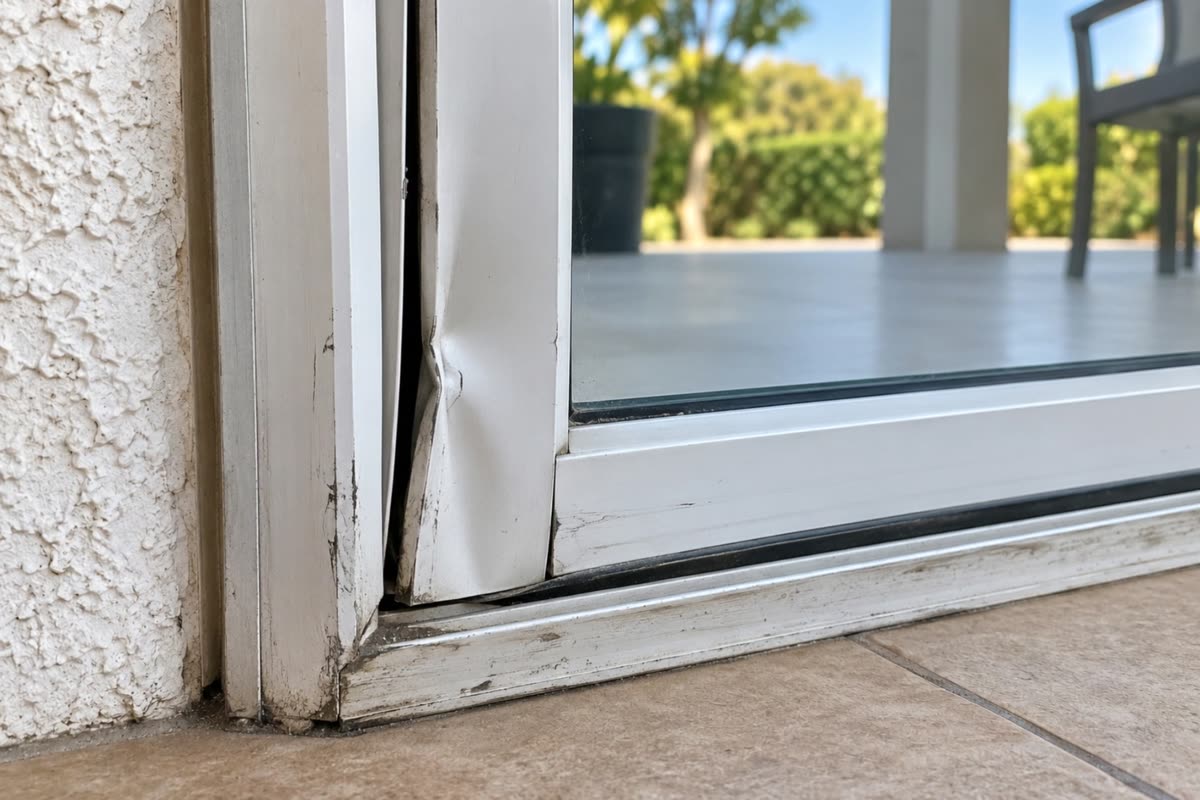
A glass panel that leans, lifts unexpectedly, sits partly off its normal path or appears loose is no longer a routine cleaning problem. Clear the immediate area and keep the panel where it is if you can do so without approaching the opening. Describe what changed and how the area is being kept clear. A wide picture from a safe position may show which corner or part of the opening is involved. A heavy panel can become less stable when someone tries to pull it back into position or asks another person to hold it. The repair plan needs the right support and access before anyone attempts to move it.
Get loose dirt off the visible wheel path
On a stable door, follow its maker's directions for accessible dust. A soft brush or suitable vacuum attachment can lift loose material without dragging it along the finish.
Loose grit can make a door sound rough without changing its geometry. The evidence is strongest when the panel moves normally once loose material is removed from the accessible track, then behaves poorly again after debris has visibly returned. Take care to identify the surface that carries the wheel. Sand next to a screen track can be conspicuous while the glass panel is actually running on a different strip. If a clear, stable rail produces a bump at exactly the same point, describe that remaining pattern. It gives the technician a more useful starting point than the amount of dirt on the sill alone.
Check the surface before choosing a cleaner
Start with the instructions for the sill material. Keep a stained spot in a photo before trying anything stronger, especially where paint and exposed metal meet.
Different exterior finishes require compatible care. A painted frame, metal running strip and coated glazing can look as if they need the same cleaner when their instructions differ. Use the maker's guide for the surface involved. Avoid forcing grit across a finish with a hard tool. If a patch remains after normal care, document it before applying a stronger product. A picture of how far the mark extends can help distinguish surface residue from damage or material wear. Keep the rail and latch symptoms separate from appearance so the person inspecting the door can discuss which conditions affect operation and which affect finish.
Preserve the sill outlets
After the running path is clear, locate the drainage openings identified for the product. Keep those areas open and record where dirt appears again instead of filling the channels.
Many window and patio door systems have sill channels that collect small amounts of incidental water and direct it outside. The outlets can be hard to distinguish from hardware openings. Follow the product's diagram or instructions when identifying them. A sill with a visible exterior drain behaves differently from a gap between the door frame and the wall. Photograph the first wet location and give the direction of exposure. Sealing an outlet or putting material into a channel can redirect water instead of fixing the problem. A repair plan should preserve drainage while addressing the route that lets water reach the indoor side.
Check the product before adding lubricant
Find the instructions for the model and specific component. Some guidance applies to moving hardware rather than the rail, and the instructions can specify whether lubricant is needed.
Instructions that apply to one door can be wrong for another. Materials, coatings, wheel designs and drainage paths vary among makers and product generations. Search for the instructions that match the label or original paperwork and look for care of the exact part. A cleaning recommendation for glass may differ from one for a sill or lock. The maker may also give special instructions for a screen or exposed metal finish. If the product cannot be identified, keep to basic observation and light care of accessible surfaces, and ask for guidance before using chemicals, abrasives or lubricant. Preserve the original label or photograph it for the next visit.
Notice the hard spot that remains
Describe one location relative to the closing jamb if a jolt survives cleaning. For a short video, state whether it is the glass or screen panel that crosses the mark.
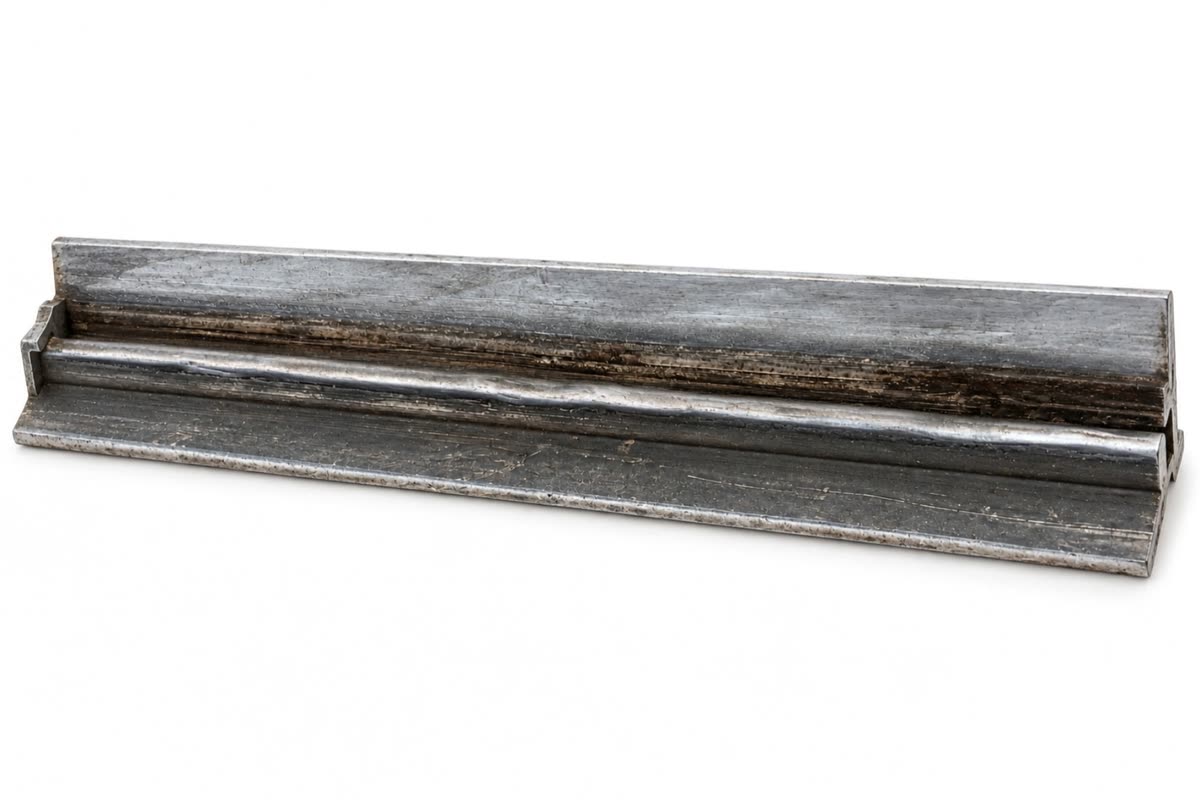
A rail supports weight on a narrow running edge. When the edge is worn flat, dented or interrupted at a joint, it can move the wheel slightly up, down or sideways as it passes. The rest of the sill might still be sound. A helpful examination looks at the length of affected rail, whether it has stable support, and whether its shape matches the wheel. Note the spot from the closed end of the opening, since the position of the handle changes according to which wheel is crossing the mark. Give the whole sill in a photo so the repair team can orient itself.
Use weather and exposure as clues
A sill facing a bare yard and one under a covered balcony can need different care schedules. Set your routine after seeing when the material actually returns.
San Diego County has substantial differences between the coast, inland valleys and higher areas. A single zip code or a regional forecast gives a rough setting for the opening. The details that matter at the door are the direction it faces, whether it sits under cover, the water or debris that can reach it and how often it is operated. When a symptom occurs only in certain weather, record both a problem day and a normal day. A dated comparison helps distinguish a condition tied to exposure from a wheel, latch or frame problem that gradually worsened and happened to be noticed after a storm.
Look for a cause beneath the panel
A gritty sound through a cleared stretch can come from a part under the panel. Report whether it happens at the beginning, through the middle or under one end.
What the homeowner feels at the pull can originate under either end of the moving panel. The rollers are carried in assemblies that have to support the load and fit the panel. A worn bearing can transmit a rough feel through a clean section of track. An uneven wheel can produce repeated movement while it turns. The technician checks both ends because one assembly may still be doing its job. The proposed part also has to match the rail profile and available adjustment range. These checks help explain why replacing a wheel based on the size seen in a photo can leave the travel problem unresolved.
Make a baseline for future cleaning
Write the date and one observation, such as whether the door traveled normally after care. Compare against that entry the next time it becomes unusually hard to use.
A useful care routine is small enough to repeat and specific to the product. At an exposed opening, note when debris appears and care for the accessible track and drain areas according to the manufacturer's instructions. At a busy door, use ordinary operation to notice increasing effort or a lock that changes position. Keep a short history of what was cleaned and when a persistent symptom first appeared. If a repair is needed, this history helps distinguish a recurring exposure condition from wear or a part that needs attention. Keep the care instructions for any replacement rail or hardware with the service record.
Local examples in Pacific Beach and La Jolla
A Pacific Beach tenant may see a sandy patch where the door meets the outer screen. An owner in Poway may see fine yard dust along most of the visible sill after dry wind. Each can take a photo before cleaning and note whether ordinary travel returns afterward. A La Jolla balcony may be reachable only from the unit. Keep the cleaning to the surfaces you can safely reach and tell the property contact if access beyond that is needed.
Questions to ask
How often should I clean the rail?
Look for the accumulation that actually reaches your opening, then follow the maker's care schedule. A heavily used, exposed door may deserve more frequent visual checks than a protected one.
What if the door is rough after the track looks clean?
Describe which panel moves, where it catches and whether the problem occurs in both directions. A clean visible rail leaves wheel, fit and wear questions for the technician.
Can I wash the entire sill with a hose?
Use the product guidance for the actual sill and building. Flooding the opening can obscure where water normally drains and where the indoor floor first becomes wet.
Local service and related pages
Explore Sliding Door Track Repair, Sliding Door Roller Replacement. Service-area details are available for Pacific Beach, La Jolla, Poway. Call 619-389-3123 or send a service request to describe the opening at your property.